Summary
EV charging in strata and body corporate buildings is becoming a practical necessity in 2026 rather than a future consideration. With growing EV ownership in apartments and townhouses, shared charging infrastructure, clear governance, and forward planning are essential to support residents while managing cost and electrical capacity.
As electric vehicle ownership continues to rise across Australia, strata and body corporate buildings are under increasing pressure to support EV charging. Apartment living presents unique challenges, including shared infrastructure, approval processes, and equitable access for residents.
In 2026, successful EV charging in strata environments depends less on individual installations and more on well-planned, scalable systems that balance current demand with future growth.
Why EV Charging Matters for Strata Buildings
EV charging is no longer a niche request from a small number of residents. As EV adoption increases, buildings without charging infrastructure risk becoming less attractive to buyers and tenants.
Strata buildings that plan for EV charging benefit from:
- Improved property appeal and long-term value
- Reduced future retrofit costs
- Better alignment with transport and sustainability goals
Government agencies increasingly recognise the importance of EV-ready multi-residential buildings. National transport and energy strategies supporting EV uptake are outlined by the Department of Climate Change, Energy, the Environment and Water:
https://www.dcceew.gov.au
Common Challenges in Strata EV Charging
Strata and body corporate buildings face a set of challenges that differ from standalone homes.
Limited electrical capacity
Many older buildings were not designed to support multiple EV chargers. Without load management, simultaneous charging can overload existing infrastructure.
Approval and governance processes
Installing EV chargers typically requires approval from the owners corporation or body corporate. Clear documentation and technical planning are essential to avoid disputes and delays.
Cost allocation
Determining who pays for infrastructure upgrades, charger installation, and ongoing electricity use can be complex in shared environments.
Fair access and scalability
As more residents purchase EVs, unmanaged charging can lead to congestion and inequitable access.
Shared vs Dedicated Charging Models
In 2026, most strata buildings are moving away from individual point-to-point installations toward shared or managed charging systems.
Shared charging infrastructure
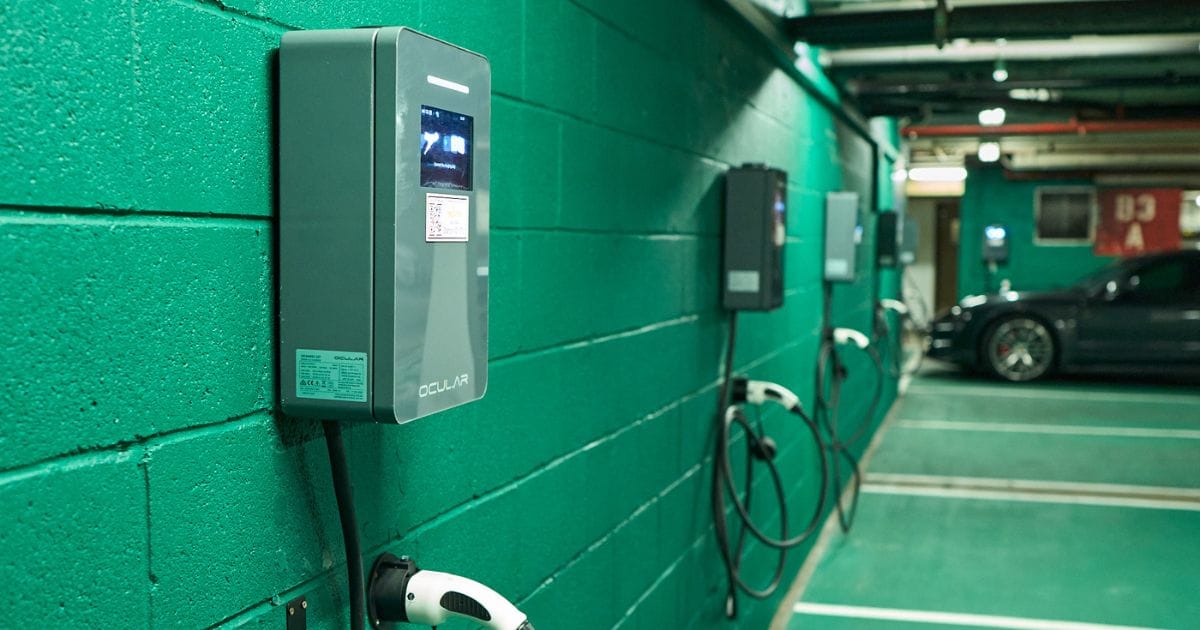
Shared chargers located in common parking areas allow multiple residents to access charging without duplicating electrical upgrades. Software-based access control and billing ensure fair use.
Dedicated chargers with smart management
Some buildings support dedicated chargers in individual parking bays, provided they are connected to a load-managed system that limits total site demand.
Both approaches benefit from centralised monitoring, usage tracking, and scalable design.
The Importance of Load Management
Load management is critical in strata environments. Smart charging systems dynamically balance available power across multiple chargers, preventing overload while maximising charging availability.
This approach allows buildings to:
- Avoid costly network upgrades
- Support more EVs using existing infrastructure
- Scale charging capacity over time
Guidance on managing electricity demand and network capacity is available through the Australian Energy Regulator:
https://www.aer.gov.au
Planning for Compliance and Future Demand
While EV chargers are not universally mandatory in strata buildings in 2026, EV-ready infrastructure is increasingly expected in new developments. The National Construction Code and Australian Building Codes Board provide guidance on future-proofing buildings for EV charging:
https://www.abcb.gov.au
For existing buildings, early planning is essential. Installing conduit, allocating electrical capacity, and selecting scalable charging platforms can significantly reduce future disruption and cost.
Best Practices for Strata EV Charging in 2026
Strata buildings that successfully implement EV charging typically:
- Develop a clear EV charging policy
- Choose scalable hardware and software solutions
- Use access control and billing systems
- Plan infrastructure for future expansion, not just current demand
Collaboration between strata committees, residents, and experienced EV charging providers is key to long-term success.
Final Thoughts
In 2026, EV charging in strata and body corporate buildings is no longer optional planning. Buildings that invest in smart, shared, and scalable charging infrastructure are better positioned to meet resident expectations, protect property value, and manage energy demand responsibly.
With the right strategy, strata EV charging can be implemented efficiently, fairly, and in a way that supports both current residents and future growth.