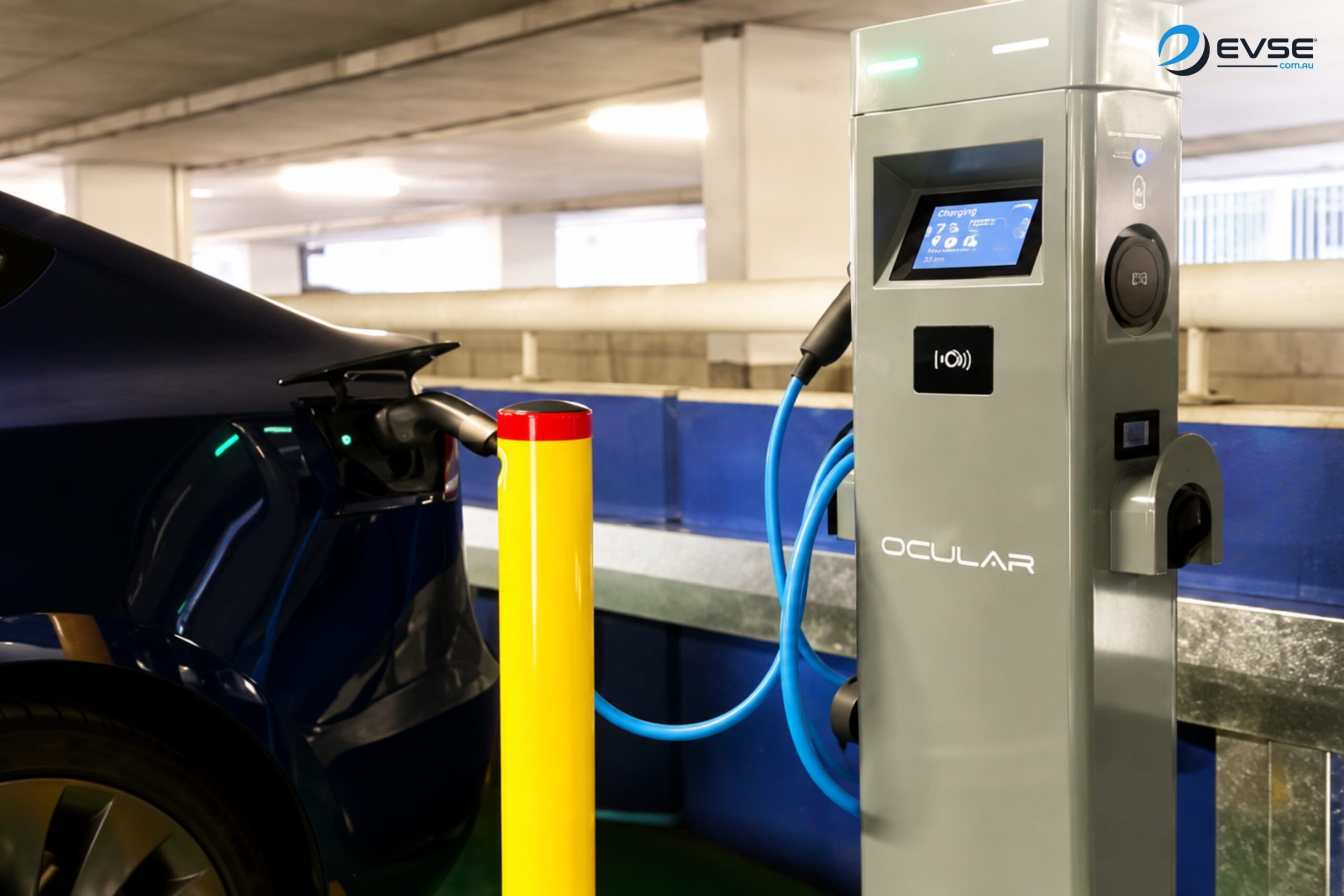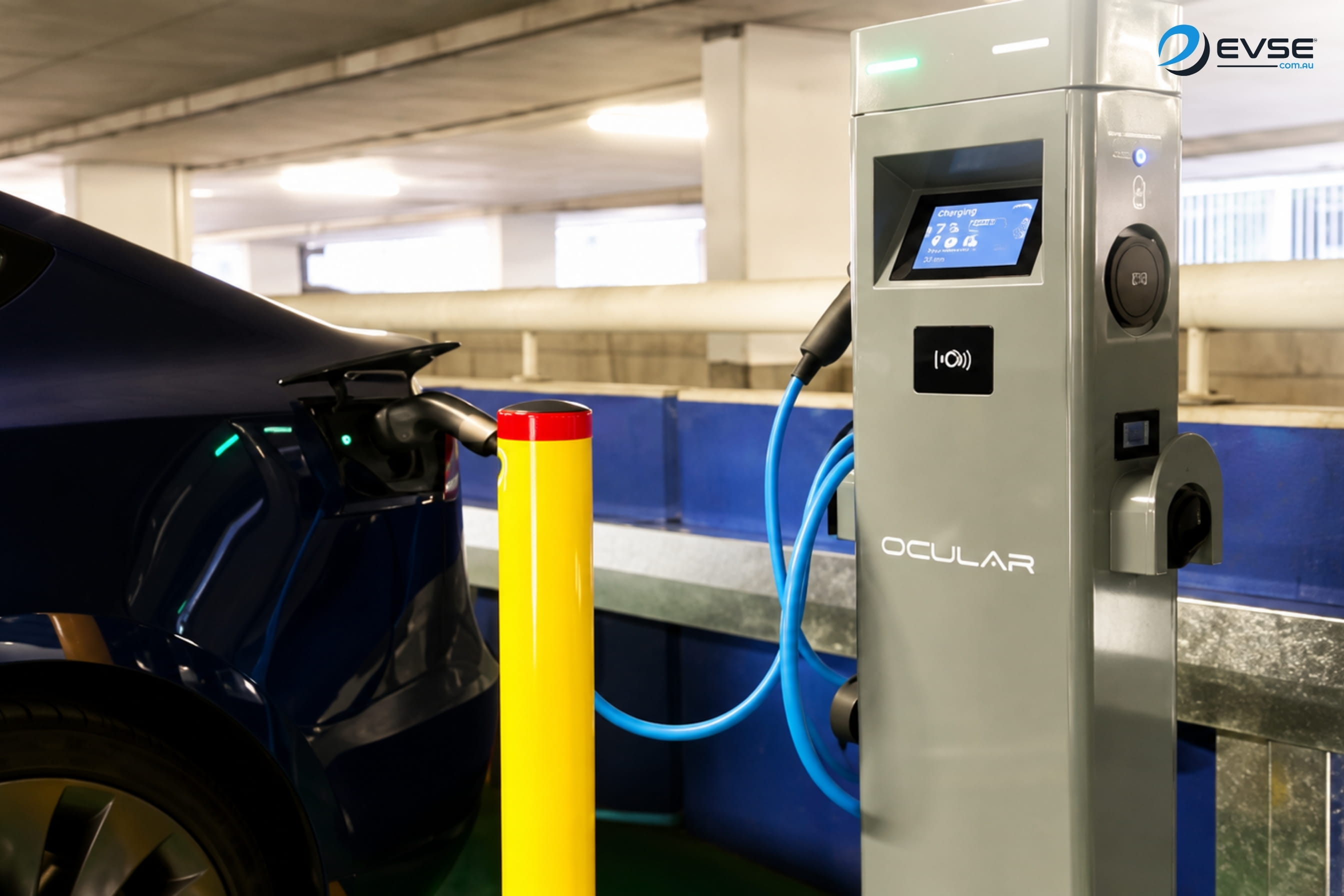
For an asset manager, an EV charging installation is an infrastructure decision that will affect tenants, building compliance, asset value, and electricity costs for years after the install is complete. It’s not a maintenance job. The decision of who installs it, and under what commercial terms, deserves the same scrutiny as any other capital works decision.
The challenge is that the EV charging market is still maturing. Providers range from serious, end-to-end infrastructure companies to resellers who supply hardware and hand off installation to whoever answers their phone. Identifying the difference before you sign a works order is the point of this guide.
Why the Installer Matters More Than the Hardware
Commercial charger hardware from reputable brands is largely reliable. The failure modes in most commercial EV charging installations are not the hardware itself but the installation quality, the infrastructure design, and the post-installation support model. An incorrectly sized sub-board, a load management system configured without reference to the building’s actual electrical demand profile, or a charger position that turns out to be inaccessible to certain vehicle types creates operational problems that persist for the life of the installation.
Asset managers who treat EV charging as a hardware procurement exercise and focus on per-unit pricing consistently encounter these problems. The ones who treat it as an infrastructure engagement, with proper scoping, design, and accountability, consistently get installations that work.
The Site Assessment: Non-Negotiable First Step
Any credible commercial EV charging installer will conduct a site assessment before quoting. This assessment covers the building’s existing electrical infrastructure, the available switchboard capacity, the proposed charger positions, the cable run distance, and any infrastructure works required before chargers can be installed.
Be cautious of any provider who quotes a commercial installation without a site assessment. A quote produced without site assessment data is either padded with contingency that will be extracted in variations, or it’s based on assumptions that will prove wrong during installation.
What a proper site assessment delivers: A documented assessment of available switchboard capacity, required infrastructure upgrades, proposed charger positions with access and cable route details, DNSP notification requirements, and a fixed-scope quote with clearly stated inclusions and exclusions.
Key Evaluation Criteria for Asset Managers
End-to-End Accountability
The installer you engage should be accountable for the complete scope: site assessment, electrical design, infrastructure works, hardware supply, installation, OCPP configuration, load management setup, and commissioning. If any of these elements is subcontracted to a party you haven’t approved, the accountability chain breaks down.
Ask specifically: who conducts the electrical design? Who is responsible for the infrastructure works? If subcontractors are used, what oversight does the primary installer provide?
Insurance and Licensing
All electrical work in Australia must be performed by a licensed electrician. Commercial EV charging installations also require public liability insurance from the installing company. For asset managers with strata, body corporate, or institutional investor oversight, the insurance certificate of currency should be sighted before works commence.
NCC Compliance for New Developments
For asset managers overseeing new builds or significant refurbishments, the installer needs to understand NCC 2025 EV charging requirements and how they apply to the specific development type and state. An installer who isn’t across NCC compliance requirements creates regulatory exposure for the asset.
Load Management for Multi-Tenancy Buildings
Commercial and multi-residential buildings require load management on any installation of more than a few chargers. Load management software allocates available electrical capacity dynamically across connected chargers, preventing aggregate demand from exceeding the building’s supply.
Ask the installer which load management platform they use, whether it is OCPP compliant, and whether it can be monitored and managed independently of the installer if you choose to change providers. Proprietary load management systems that only function through the installer’s platform create ongoing dependency.
Reference Installations in Comparable Properties
Ask for two or three reference contacts from completed installations in comparable property types: commercial office buildings if you manage commercial assets, residential towers if you manage strata, or retail centres if your portfolio includes retail. References from genuinely comparable projects tell you significantly more than testimonials on a website.
Questions to Ask Before Engaging
| Question |
Why It Matters |
| Do you conduct your own site assessments? |
Separates proper assessment from box-ticking |
| Who is responsible for the electrical design? |
Identifies where design liability sits |
| Are your installers trained specifically in EV charging? |
General electricians may not understand OCPP or load management |
| What load management platform do you use? |
OCPP compliance and independence from provider |
| What is your response time for faults post-installation? |
Support model and uptime accountability |
| Can you show references in comparable buildings? |
Demonstrated experience, not claimed capability |
| What does your warranty cover and what does it exclude? |
Separates hardware warranty from installation warranty |
Post-Installation: What Should Be in the Handover Package
A well-executed commercial EV charging installation should produce a complete handover package for the asset manager’s records. This should include the electrical compliance certificate, as-built drawings showing cable routes and charger positions, equipment warranty documentation, OCPP platform access credentials, load management configuration documentation, and an operational guide for tenants and building management staff.
Installers who don’t provide a comprehensive handover package create ongoing management challenges. Building management changes, tenants change, and institutional asset managers need documentation that survives staff turnover.
EVSE for Asset Managers
EVSE works with commercial asset managers across Australia on EV charging infrastructure for office buildings, strata properties, retail centres, and mixed-use developments. Our commercial team handles the complete scope from site assessment through to post-installation support, and provides comprehensive handover documentation for all commercial projects.
Contact our commercial team to discuss a site assessment for your property.
The selection decision for an EV charging installer is worth more time than most asset managers give it. A well-chosen installer delivers an installation that performs reliably for years. A poorly chosen one creates a maintenance and compliance problem that will cost more to correct than the original installation savings were worth.
-
Job title / role - CEO
Years of experience in EV charging or electrical work 11 years
Relevant credentials or certifications (e.g. licensed electrician, Clean Energy Council accreditation, EV specialist training, brand certifications) EV specialist, ev driver, member of AFMA, AEVA, EV Council, HVIA
Brendan Wheeler is Co-Founder and CEO of EVSE Australia, a vertically integrated EV charging provider. He leads the rollout of infrastructure across home, workplace and public charging. His focus is on building a connected platform that delivers reliable, commercially sustainable outcomes.