For decades, businesses have had to accept a degree of volatility in the cost of moving people and goods. Petrol and diesel prices are influenced by global oil markets, exchange rates, refining capacity, shipping costs, supply constraints and geopolitical events, many of which sit well outside the control of the businesses ultimately paying the bill. A change in global crude prices can eventually find its way into the operating costs of a transport company, field service business, sales fleet or delivery network. For organisations running hundreds or thousands of vehicles, those movements can have a meaningful impact on budgets and forecasting.
That is why the conversation around vehicle electrification is beginning to extend beyond emissions and total cost of ownership. Increasingly, businesses are considering energy security and cost certainty as part of their fleet strategy. The question is no longer simply whether an electric vehicle costs less to operate than a petrol or diesel equivalent. It is whether a business can gain greater control over the energy required to keep its vehicles moving.
Global fuel prices create an ongoing business risk
The fundamental challenge with liquid fuels is that businesses have limited influence over the underlying commodity price. Fleet operators can improve driver behaviour, optimise routes, select more efficient vehicles and negotiate commercial fuel arrangements, but they remain exposed to movements in global oil markets. Even where a business has relatively predictable fuel consumption, the price paid for that fuel can change considerably over time.
Electricity is not immune to volatility. Power prices are influenced by generation, network costs, demand, weather and broader energy-market conditions. The important difference is that electricity gives businesses more ways to manage their consumption. An electric vehicle does not necessarily need to draw maximum power the moment it is connected. Charging can be scheduled, delayed, prioritised or reduced according to the vehicle’s requirements and the site’s available capacity. That flexibility gives businesses something liquid fuels cannot: greater control over when energy is purchased and consumed.
This becomes increasingly significant as fleets grow.
EV charging changes the energy equation
A petrol or diesel vehicle generally creates a relatively simple energy transaction. When the tank is low, it is refuelled. With an electric vehicle, the charging process can be distributed across several hours and several locations, creating opportunities to manage energy demand rather than simply respond to it.
Consider a fleet returning to a depot at the end of the day. If every vehicle begins charging at maximum power as soon as it arrives, the site’s electricity demand could rise sharply. That may create unnecessary pressure on the site’s electrical infrastructure and, depending on the tariff structure, potentially increase costs. Intelligent charging provides another approach. Vehicles can be prioritised according to their next departure time, state of charge and operational requirements, while available power is dynamically distributed across the fleet.
The objective is not to slow charging for the sake of it. It is to ensure that every vehicle receives the energy it needs without treating maximum simultaneous charging as the default.
That distinction becomes increasingly important as electrification moves from a handful of vehicles to a substantial proportion of a fleet.
Energy security is about reliability as much as price
For a business, energy security is ultimately about operational certainty. An electric vehicle that cannot charge when required can create the same practical problem as a vehicle that cannot access fuel. The consequences can extend beyond the vehicle itself, affecting schedules, customer commitments, employee productivity and asset utilisation.
This makes charging infrastructure a critical operational asset. Businesses need confidence that chargers will be available, that faults can be identified and addressed, and that vehicles can be prepared for the next stage of their journey. The requirement becomes even more important for commercial fleets operating to fixed schedules, where a narrow charging window may determine whether a vehicle is ready for its next shift.
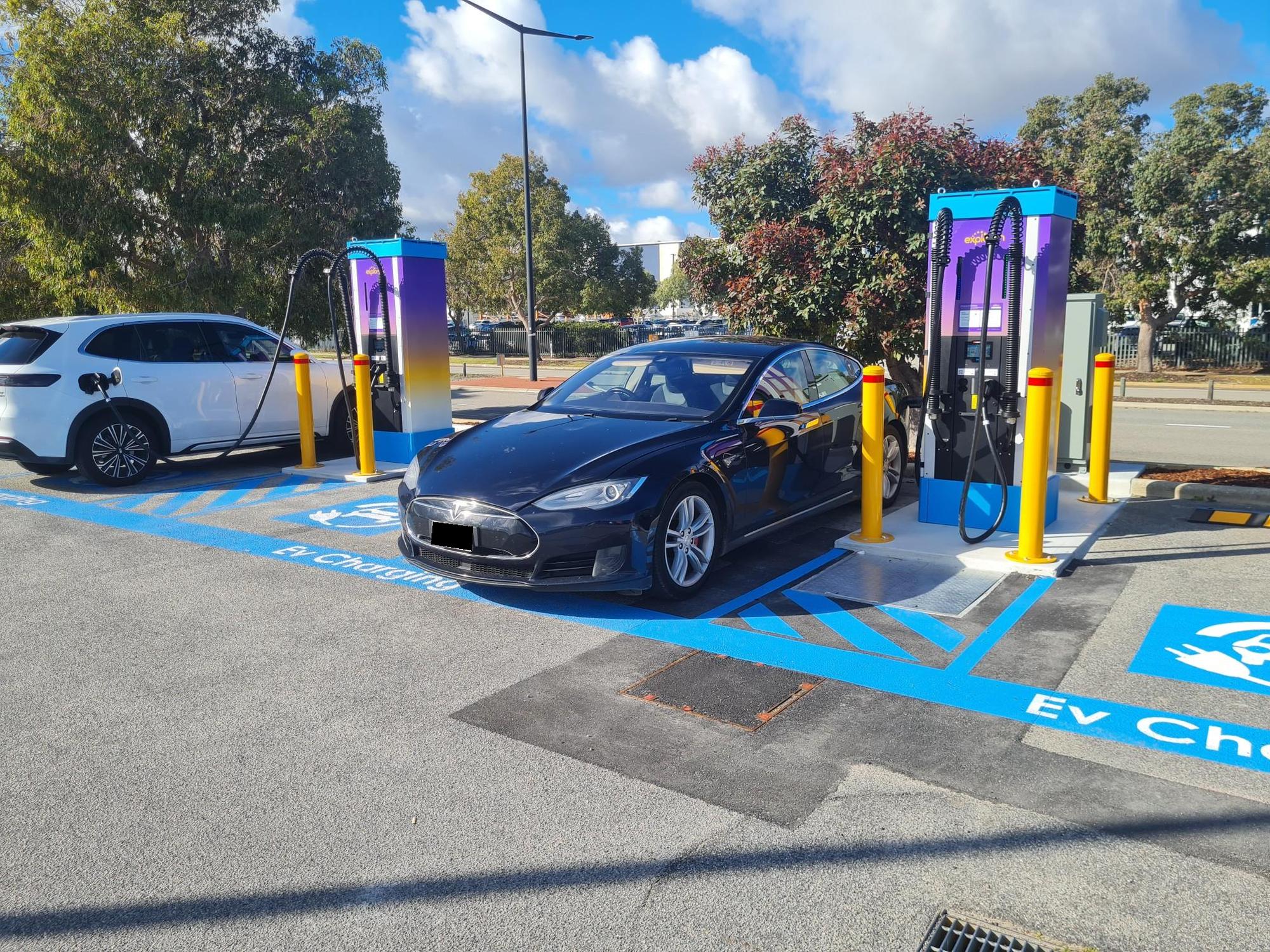
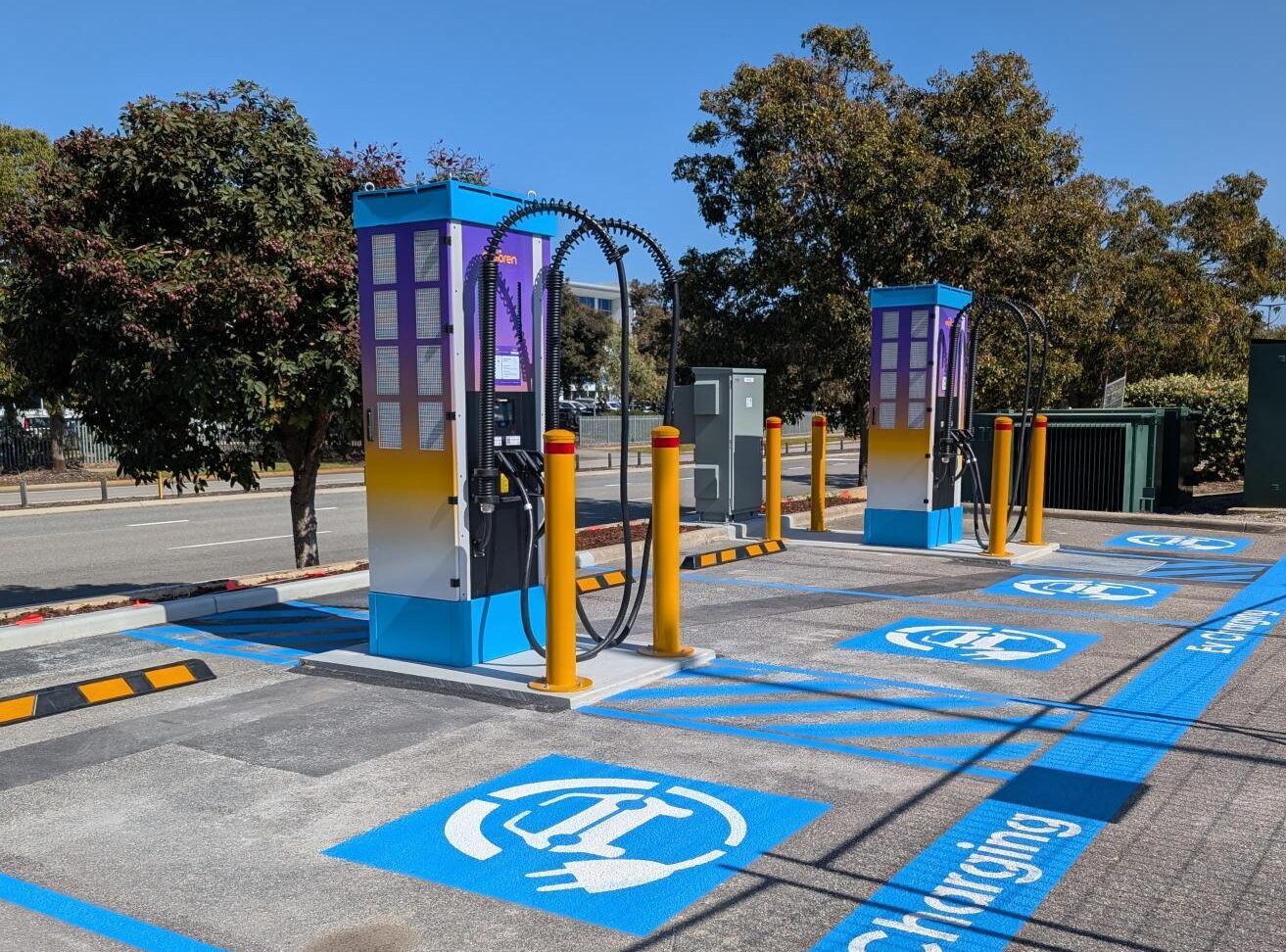
The same principle applies to public charging. A business may have sufficient charging capacity at its own sites but still depend on public infrastructure for longer journeys or vehicles operating outside their normal geographic area. In that environment, charger availability, reliability and network access become part of the fleet’s overall energy strategy.
Home, workplace and public charging are becoming one ecosystem
The traditional distinction between home, workplace and public charging is becoming less meaningful from a fleet perspective. A company vehicle might charge at an employee’s home overnight, receive additional energy at the workplace during the day and use a public fast charger while travelling between customers. Each charging location is different, but the business ultimately has one objective: making sure the vehicle has enough energy to perform its role at a predictable cost.
That creates a need for visibility across the entire charging ecosystem. Businesses need to understand how much energy is being consumed, where it is being consumed and what it is costing. They also need to consider how charging behaviour affects the wider energy system. A vehicle that can comfortably charge overnight does not necessarily need to charge at a higher-cost time. A vehicle leaving shortly may need to be prioritised over one that will remain parked for another eight hours.
Software and intelligent charging systems can help turn this complexity into something manageable. Rather than treating every charger as an independent asset, businesses can begin managing charging as a coordinated network across employees’ homes, offices, depots and public charging providers.
The workplace is becoming part of the energy strategy
Workplace and depot charging present another important consideration: electrical capacity. A business may have enough grid capacity for its current operations but not enough to support a large EV fleet charging at full power simultaneously. Simply adding chargers can therefore become an expensive way of addressing a problem that is fundamentally about energy management.
Dynamic load management can make better use of the capacity already available. Charging power can be distributed according to operational priorities, allowing a vehicle that needs to leave shortly to receive more power while another vehicle, which will remain parked overnight, can charge later. For larger sites, this can reduce unnecessary peaks and help businesses make more efficient use of existing infrastructure.
It also changes the way charging infrastructure should be planned. The number of charging points is important, but so is the amount of energy the site can reliably deliver over a given period. A site with fewer intelligently managed chargers can, in some circumstances, support a fleet more effectively than a site with a large number of unmanaged charging points.
Home charging brings the same issue into focus
For businesses with employees taking company vehicles home, charging does not end when the vehicle leaves the workplace. Home charging effectively extends the company’s charging network into hundreds or thousands of individual locations, depending on the size of the fleet.
That creates practical questions around reimbursement, energy consumption, visibility and employee experience. Businesses need a reliable way to identify charging associated with company vehicles, understand the energy consumed and manage the associated costs without creating unnecessary administrative work for employees.
It also creates another opportunity for smart charging. If a vehicle is plugged in at 7pm but does not need to leave until 7am, there may be considerable flexibility around when that energy is delivered. Managing that flexibility across a large fleet can become an important part of controlling overall energy costs.
Cost certainty matters as much as cost reduction
Businesses naturally want to reduce the cost of charging, but the more strategic objective is often cost certainty. The cheapest possible kilowatt-hour today is not necessarily the most valuable outcome if the business has little visibility over what charging will cost next year.
Greater visibility allows businesses to make better decisions. They can compare home, workplace and public charging costs, identify where fast charging is operationally necessary, assess the value of solar generation or battery storage, and understand how charging behaviour affects site demand. They can also build a clearer picture of the total energy cost associated with running an electric fleet.
This is particularly important when businesses are making long-term fleet decisions. Electrification involves more than the purchase price of a vehicle. Charging infrastructure, electricity consumption, network capacity and operational patterns all form part of the economics. The more predictable those variables become, the easier it is for businesses to plan and invest with confidence.
From fuel procurement to energy strategy
The larger shift is that transport and energy are becoming increasingly connected. Historically, a fleet manager could focus on vehicles and fuel while electricity sat within a separate facilities or finance function. EVs bring those responsibilities together. The fleet becomes a significant electricity consumer, and the way vehicles are charged can influence the energy requirements and costs of the wider business.
That means the conversation needs to move beyond the charger itself. The important question is not simply which charger to install, but how the entire charging ecosystem should operate across home, workplace and public networks.
Businesses cannot eliminate exposure to global energy markets. Nor can EVs remove every form of electricity-price volatility. What they can do is create more opportunities to manage that exposure. Charging can be scheduled. Demand can be balanced. Energy can potentially be generated and stored on site. Public networks can supplement private infrastructure. Software can bring visibility to an energy system that would otherwise be difficult to manage.
That is where the real strategic value of EV charging begins to emerge.
The next stage of EV adoption is energy management
As electric fleets become larger, charging will increasingly be treated as an energy-management challenge rather than simply an infrastructure project. Businesses will need to think about where vehicles charge, when they charge, how much power they require and how those requirements interact with the wider electricity system.
The most effective strategy may involve a combination of home charging, workplace infrastructure, depot charging and public networks. What connects them is the ability to manage the energy flowing through the system.
For businesses operating in an environment of uncertain global fuel prices, that control matters. Energy security means having confidence that vehicles will have the energy they need when they need it. Cost certainty means having the visibility and tools to understand, manage and forecast what that energy will cost.
The charger is only the visible part of the transition.
The bigger opportunity is building an energy system around the vehicle that gives the business greater control over both.
-
Job title / role - CEO
Years of experience in EV charging or electrical work 11 years
Relevant credentials or certifications (e.g. licensed electrician, Clean Energy Council accreditation, EV specialist training, brand certifications) EV specialist, ev driver, member of AFMA, AEVA, EV Council, HVIA
Brendan Wheeler is Co-Founder and CEO of EVSE Australia, a vertically integrated EV charging provider. He leads the rollout of infrastructure across home, workplace and public charging. His focus is on building a connected platform that delivers reliable, commercially sustainable outcomes.