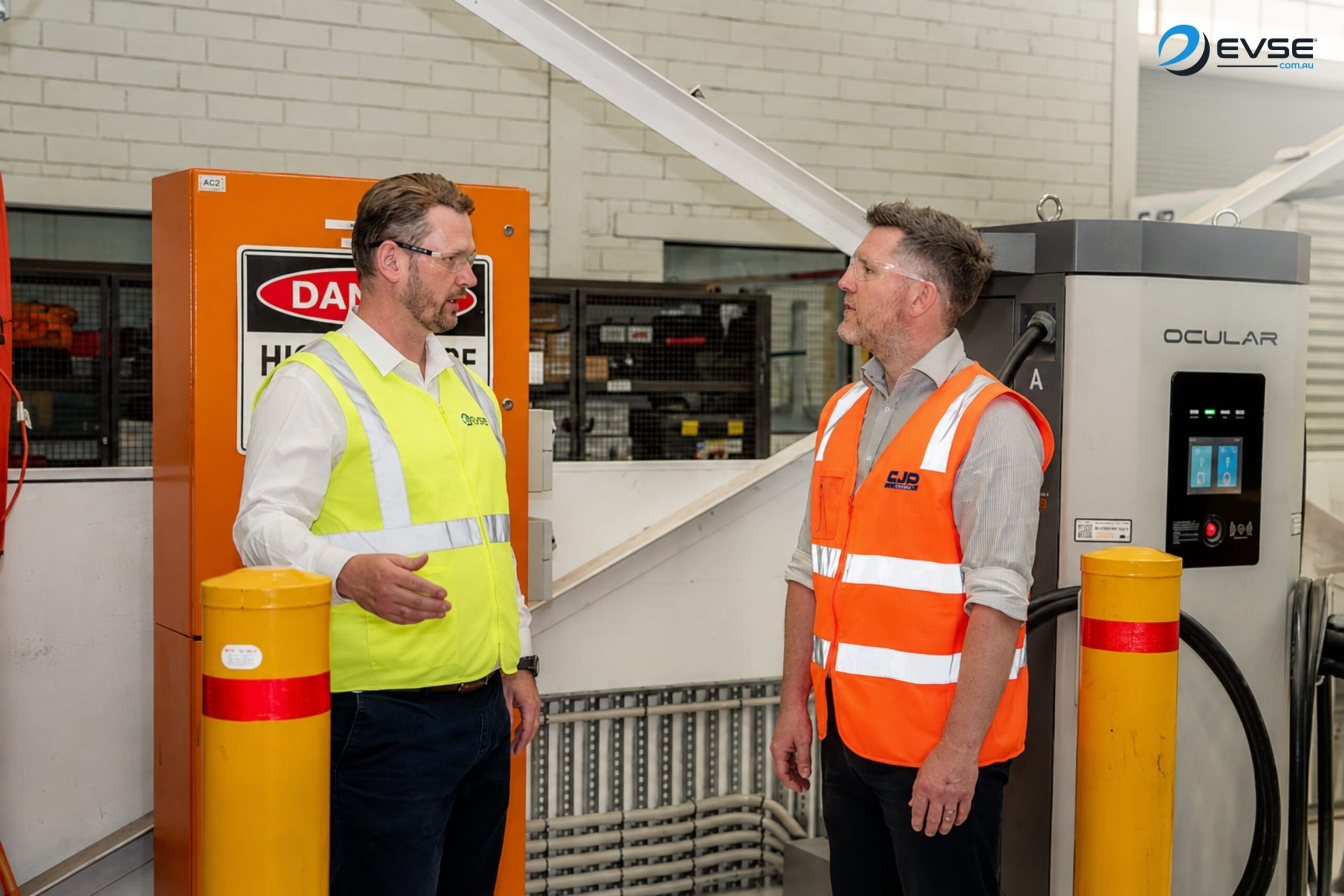
A commercial EV site capacity check is the assessment that tells you what your property can actually support before any charger hardware is ordered or installed. It sounds like a procedural step, but it is the most commercially important decision point in any commercial EV charging project.
This article explains what a capacity check involves, who conducts it, how long it takes, what it costs, and what you do with the output.
What a Commercial EV Site Capacity Check Is
A site capacity check is a formal assessment of a property’s electrical infrastructure carried out by a licensed electrician with commercial EV charging experience. Its output is a report that tells you how much additional electrical load the site can support, what infrastructure upgrades (if any) are needed to support the planned charger deployment, and what the DNSP requirements are for the proposed load addition.
It is not a quote. It is not a design. It is the information that makes a reliable quote and design possible. Providers who quote commercial EV charging installations without conducting a capacity check are either guessing at the infrastructure requirements or loading significant contingency into their pricing.
What the Assessor Looks at
The Main Switchboard
The assessor inspects the main switchboard, records its rated capacity, identifies the current load profile, and determines whether there is available circuit space and amperage for additional EV charging circuits. An older switchboard may have limited physical space for new circuit breakers, may have a main incomer rated below what is needed, or may use equipment types that are no longer compliant with current Australian standards.
The Incoming Supply
The incoming supply is the cable and metering connecting the distribution network to the switchboard. Its rated amperage sets a ceiling on the building’s total demand. If the incoming supply is already operating near capacity, adding EV chargers will either require a supply upgrade or load management to ensure the aggregate demand does not exceed the supply limit.
Sub-Boards and Distribution
For larger commercial properties, EV chargers are often fed from a sub-board rather than the main switchboard directly. The assessor checks whether the relevant sub-board has capacity for the additional load, and whether the cable from the main switchboard to the sub-board is rated for increased current.
Cable Routes
The assessor identifies the most practical cable route from the power source to the proposed charger positions, noting any constraints, such as existing underground services, structural elements requiring penetrations, or distances that affect the cable sizing specification. Long cable runs require larger cable cross-sections to manage voltage drop.
DNSP Requirements
Depending on the size of the proposed installation, the DNSP may need to be notified or may need to conduct its own assessment. The capacity check identifies whether DNSP engagement is required and, if so, what the process and timeline are likely to be.
Who Conducts It
A site capacity check should be conducted by a licensed electrician with specific experience in commercial EV charging installations. General commercial electricians may not be familiar with DNSP notification requirements for EV loads, load management implications, or the specific requirements of OCPP-networked charger installations.
EVSE’s commercial team conducts site assessments as part of the commercial project engagement process. The assessment is conducted by an experienced commercial EV charging specialist, not a generalist electrician unfamiliar with the specific requirements of EV infrastructure.
How Long It Takes
For most commercial properties, a site capacity check takes two to four hours on site. Larger or more complex properties, such as multi-tenancy buildings, industrial sites, or properties with unusual electrical configurations, may take longer.
The written report, including the assessment findings and recommended charger specification, is typically delivered within two to five business days of the site visit.
What It Costs
Site assessment costs vary by provider and location. For a standard commercial property, expect $300 to $800 for the assessment and report. Some providers, including EVSE, include the site assessment as part of the commercial project engagement rather than charging separately.
The cost of a site assessment is not a meaningful input to the project budget decision. The cost of installing chargers without an assessment and then discovering that the infrastructure cannot support them runs to tens of thousands of dollars in rectification work. The assessment is not optional.
What to Do with the Output
The capacity check report gives you the information to make three decisions: how many chargers the site can support without infrastructure upgrades, what infrastructure upgrades are needed and at what cost if you want more chargers, and whether load management can bridge the gap between available capacity and desired charger count.
These three inputs define the project scope and budget. With them, you can request reliable fixed-price quotes from installers, because the infrastructure scope is known rather than assumed.
Booking a Capacity Check
EVSE’s commercial team conducts site assessments for commercial EV charging projects across Australia. Contact our commercial team to arrange an assessment for your property.
A site capacity check is a two to four hour investment that defines the parameters for an installation that will operate for ten or more years. The ratio of cost to value is about as good as it gets in construction and infrastructure planning.
-
Job title / role - CEO
Years of experience in EV charging or electrical work 11 years
Relevant credentials or certifications (e.g. licensed electrician, Clean Energy Council accreditation, EV specialist training, brand certifications) EV specialist, ev driver, member of AFMA, AEVA, EV Council, HVIA
Brendan Wheeler is Co-Founder and CEO of EVSE Australia, a vertically integrated EV charging provider. He leads the rollout of infrastructure across home, workplace and public charging. His focus is on building a connected platform that delivers reliable, commercially sustainable outcomes.