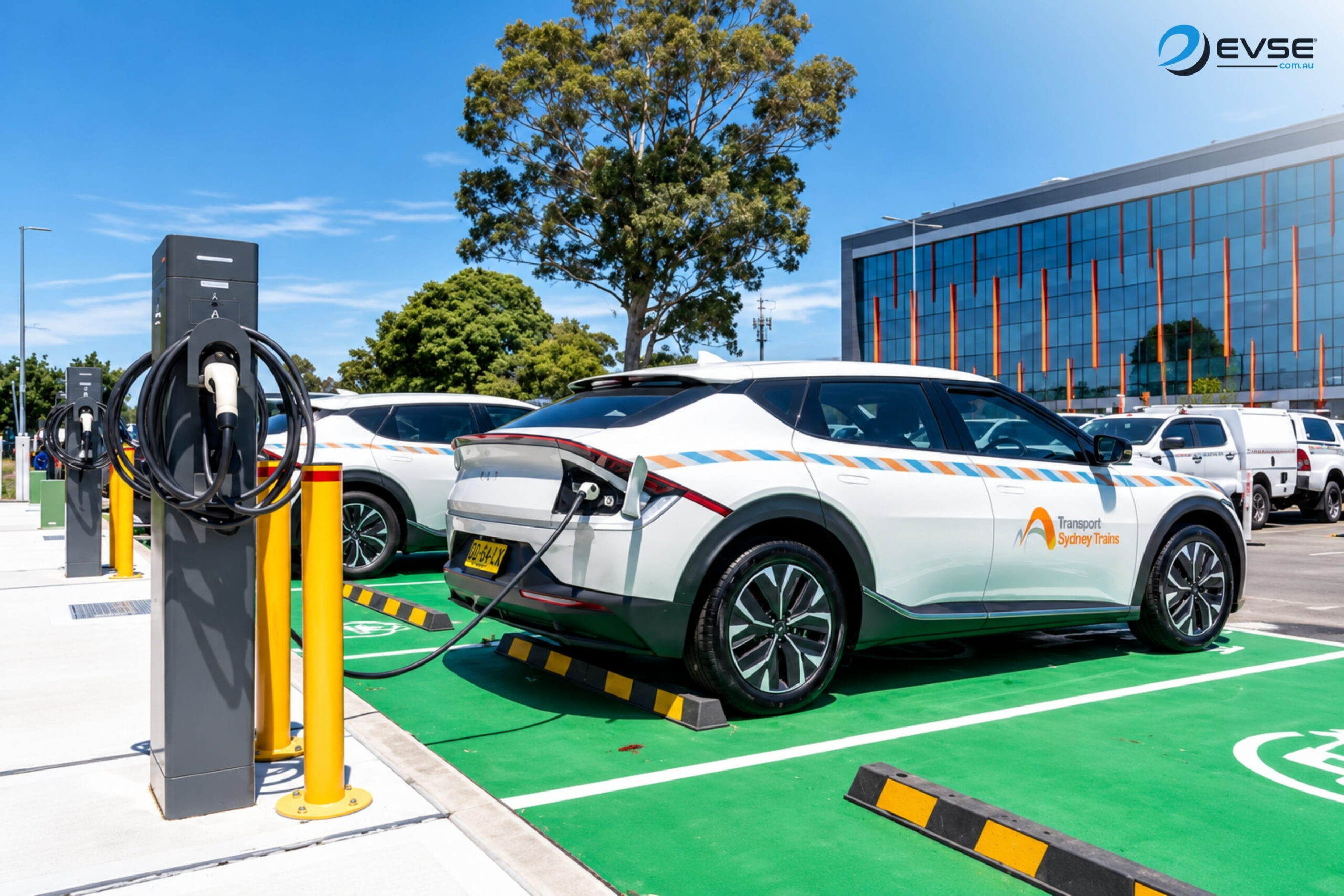
Managing EV charging for a company fleet means coordinating when and where vehicles charge, controlling electricity demand, tracking energy use and keeping charging infrastructure available. EVSE can bring depot, workplace and compatible home charging into a managed system using smart charging hardware, load management and the Exploren platform.
For businesses moving from petrol or diesel vehicles to EVs, charging becomes part of day-to-day fleet operations. The objective is not simply to install chargers. Fleet managers need to make sure vehicles receive enough energy before their next shift, electricity demand stays within site limits, charging costs can be allocated correctly and the system can grow as more EVs are added.
What Does It Mean to Manage EV Charging for a Fleet?
Managing fleet EV charging means coordinating charging around vehicle schedules, site power capacity and business requirements. EVSE supports this through charging hardware, software and load management that can help fleet operators schedule charging, monitor usage, control access and identify charger issues across their network.
In practical terms, fleet charging management usually covers four jobs:
- Scheduling charging so vehicles are ready when required and can use suitable charging windows.
- Managing electrical load so chargers do not create unnecessary pressure on the site’s available supply.
- Tracking energy use and charging sessions across vehicles, drivers and locations.
- Maintaining charger availability through monitoring, fault identification and ongoing support.
The right model depends on how the fleet operates. A delivery fleet returning to a depot each evening has different charging requirements from a field-service fleet whose employees take vehicles home.
Where Do Fleet Vehicles Charge?
Fleet vehicles may charge at a central depot, workplace, an employee’s home or public charging stations. Many fleets will use a combination of locations. EVSE can design the charging approach around where vehicles naturally stop and how long they remain parked.
| Charging model |
Best for |
Typical approach |
Management needed |
| Depot charging |
Vehicles returning to a central site |
AC or DC depending on vehicle and turnaround needs |
Scheduling, load management and monitoring |
| Workplace charging |
Passenger and light commercial fleets parked for longer periods |
Smart AC charging |
Access control, energy tracking and scheduling |
| Home charging |
Tool-of-trade vehicles taken home by employees |
Networked smart home charging |
Usage tracking and reimbursement process |
| Public charging |
Vehicles travelling beyond normal operating areas |
Public AC or DC charging |
Driver access and cost visibility |
| Hybrid charging |
Fleets operating across several environments |
Combination of depot, workplace, home and public charging |
Centralised monitoring and reporting |
Where vehicles return to the same site for several hours, charging can often be planned around those dwell periods. Home charging may suit tool-of-trade vehicles used by sales representatives, technicians or other employees who keep a company vehicle overnight.
How Do You Schedule Charging to Cut Energy Costs?
Fleet charging can be scheduled around vehicle downtime and electricity pricing instead of allowing every vehicle to begin charging at full power as soon as it is plugged in. EVSE’s Exploren platform supports scheduled charging, helping businesses coordinate charging within planned operating windows.
If a group of vehicles returns to a depot at the end of the day but is not required again until the following morning, there may be no operational need for every vehicle to charge simultaneously. Charging can instead be distributed across the available window, subject to each vehicle’s energy requirement.
- Use suitable off-peak electricity periods where available.
- Spread charging demand across longer parking windows.
- Prioritise vehicles that need to return to service first.
- Reduce unnecessary simultaneous demand on the site.
- Coordinate charging as one fleet system rather than a collection of independent chargers.
What Is Load Management and When Does a Fleet Need It?
Load management controls how much electricity EV chargers use so charging demand remains within the capacity available at the site. EVSE’s Exploren platform supports static, active and scheduled load management, giving fleet operators different ways to manage power across their charging network.
Static load management applies a defined limit to the charging system. Active load management can adjust charger output according to the power available at the site. Scheduled load management can allocate charging to selected periods.
The need for load management should be based on the site’s electrical capacity, other building loads, charger numbers and operational charging requirements. It should not be determined by charger count alone. A site assessment helps establish how much capacity is available and whether load management can make better use of existing infrastructure.
What Should Fleet Charging Software Do?
Fleet charging software should give managers visibility and control across chargers, users, charging sessions and electricity consumption. EVSE’s Exploren platform supports charger monitoring, access management, reporting, billing functions and load management across compatible charging infrastructure.
OCPP compatibility is also important. OCPP, or Open Charge Point Protocol, enables compatible charging hardware and management software to communicate using an open standard. EVSE states that its fleet software can connect more than 40 charging brands, helping businesses manage compatible hardware through a central platform.
- Monitor chargers and charging sessions.
- View charging history and electricity consumption.
- Add and manage authorised drivers or users.
- Provide access through supported methods such as app, QR code or RFID.
- Identify faults and support remote troubleshooting.
- Manage chargers across multiple locations.
- Apply charging schedules and load-management rules.
- Generate data for operational and sustainability reporting.
How Do You Track and Reimburse Home Charging?
Home charging for company vehicles can be managed through connected chargers that record charging activity and electricity consumption. EVSE’s Exploren platform can track compatible charging across multiple locations, helping businesses create a clearer record of energy used for company vehicles away from the depot or workplace.
This is useful for tool-of-trade vehicles because normal household electricity use needs to be separated from company-vehicle charging. Charging-session data can support an internal reimbursement process and provide fleet managers with broader visibility across the charging network.
Who Looks After Maintenance and Uptime?
Fleet charging infrastructure becomes operationally important once vehicles depend on it. EVSE combines connected charging infrastructure with monitoring and technical support so charger performance and faults can be identified and investigated.
Remote monitoring can help identify issues before a driver arrives expecting to charge. Depending on the scale and criticality of the fleet, businesses may also require planned inspection, maintenance and service arrangements.
How Do You Report on Energy Use and Emissions?
Charging software can provide session and electricity-consumption data that helps fleet managers understand where, when and how much energy their vehicles use. EVSE’s Exploren platform provides charging analytics and reporting that can support operational decisions and broader sustainability reporting.
- Which vehicles are using the most charging energy?
- Where is most charging taking place?
- When does charging demand peak?
- How heavily are individual chargers being used?
- When might additional charging capacity be required?
- How is energy demand changing as the EV fleet grows?
The exact method used to calculate emissions reductions depends on the organisation’s reporting framework and the emissions factors applied. Reliable charging-energy data nevertheless provides an important input.
How Can Fleet Charging Scale as More EVs Are Added?
A scalable charging system allows a business to add vehicles and charging points without redesigning the entire solution each time the fleet expands. EVSE can plan charging infrastructure, communications, OCPP-compatible hardware and load management with both current and future fleet requirements in mind.
Many businesses will electrify progressively as vehicle leases expire or suitable EV models become available. Early planning can therefore consider future distribution capacity, cable pathways, communications and charger locations, even where all chargers are not installed on day one.
What Does Fleet EV Charging Look Like in Practice?
EVSE’s fleet work provides useful examples of how charging needs differ between organisations. The supplied brief identifies fleet references including Sydney Trains, Sixt, Canterbury-Bankstown Council, Linfox and Coles, Tadwa and Toll Group. These examples should be used selectively where the relevant case study or EVSE page confirms the project details.
For fleet managers, the key lesson is that charger selection should follow an understanding of vehicle duty cycles. A vehicle parked overnight has very different requirements from a commercial vehicle that must return to service after a short turnaround.
How Should You Start Managing EV Charging for Your Fleet?
Start by mapping where vehicles park, how long they stay there, how much energy they require between shifts and what electrical capacity is available at each charging location. EVSE can then assess the charging environment, guide you through the commercial quote process, and recommend an appropriate mix of hardware, software and load management.
- Number and type of EVs currently in the fleet.
- Expected EV additions over the next several years.
- Typical daily kilometres and vehicle duty cycles.
- Where vehicles are parked overnight or between shifts.
- Available charging windows.
- Existing electrical capacity at each site.
- Whether employees require home charging.
- How charging costs need to be allocated or reimbursed.
Frequently Asked Questions
How many chargers do I need per vehicle?
There is no universal charger-to-vehicle ratio. The right number depends on vehicle energy requirements, parking time, charger speed, duty cycles and whether vehicles can share chargers. EVSE can assess these factors as part of a fleet charging design.
Can I manage chargers from different brands in one platform?
Compatible OCPP chargers can be managed through a central platform. EVSE states that Exploren can connect more than 40 charging brands, subject to hardware and OCPP compatibility.
Do I need load management for a small fleet?
Not necessarily. The need for load management depends on available electrical capacity, other site loads and the charging demand required to keep vehicles operational.
Can drivers charge at home and be reimbursed?
Connected home chargers can provide charging-session data that can support reimbursement. The exact EVSE/Exploren reimbursement workflow should be confirmed before publication.
What happens if a charger faults?
Connected charging infrastructure can provide fault visibility and support remote diagnosis. The appropriate support and maintenance arrangement will depend on the charging solution and service agreement.
-
Job Title - Co-Founder, EVSE Australia
11 years of EV charging deployment history
EV specialist, ev driver, member of AFMA, AEVA, EV Council, HVIA
Sam Korkees is the Co-Founder of EVSE Australia, a leading provider of electric vehicle (EV) charging infrastructure and solutions. Since co-founding the company in 2014 alongside Brendan Wheeler, Sam has played a pivotal role in scaling EVSE from an early-stage startup into a nationally recognised leader in EV charging.
EVSE has delivered some of the country's largest EV fleet and depot charging deployments, supporting the electrification of commercial fleets, logistics operations, and government assets. The company is also recognised as a leader in public charging infrastructure, with extensive experience in the rollout of fast and ultra-fast DC charging networks nationwide.
Sam works closely with government, utilities, and enterprise clients to design and implement scalable, future-ready charging solutions, helping accelerate the adoption of EVs across Australia.
Credentials: 11 years of EV charging deployment history, EV specialist, EV driver, member of AFMA, AEVA, EV Council, HVIA