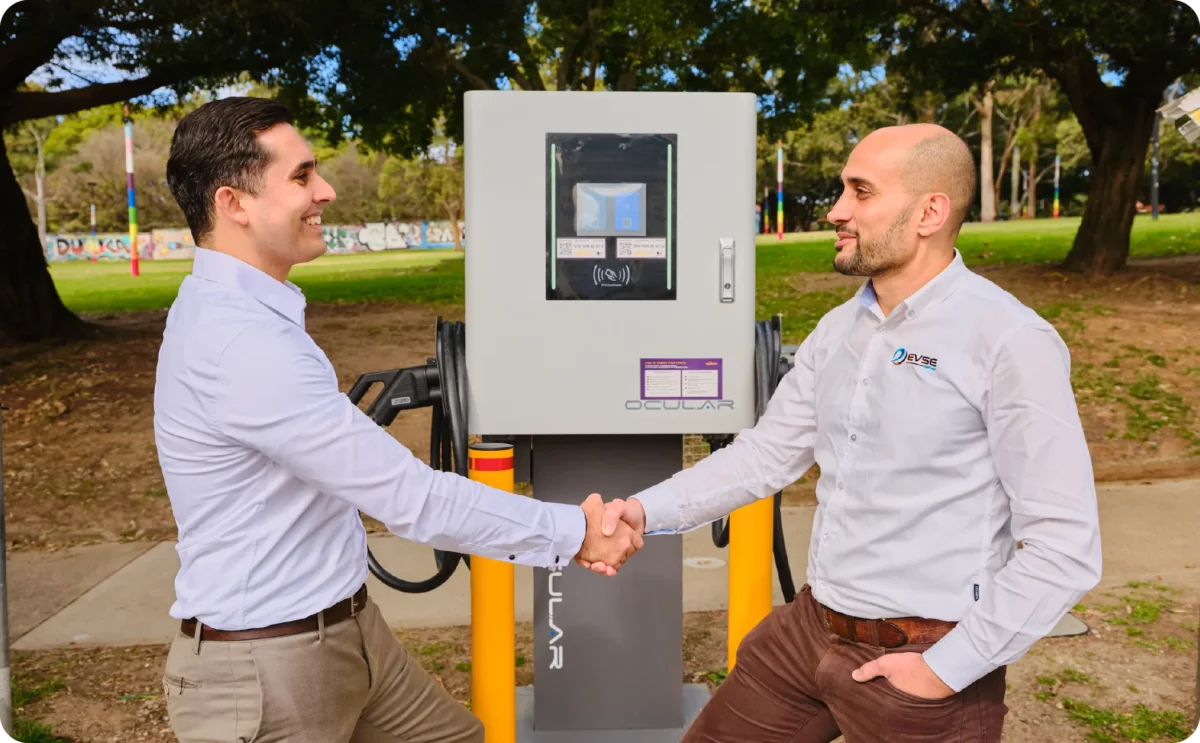
Every commercial EV charger installation teaches us something. After completing more than 200 commercial installs across Sydney in the past twelve months, spanning car parks, strata complexes, logistics depots, retail centres, and corporate campuses, we’ve accumulated a body of experience that no spec sheet or manufacturer training course could have prepared us for.
This isn’t a marketing piece. It’s a frank debrief from our install teams: the surprises, the lessons, and the things we now tell every commercial client before we quote.
1.Switchboard Capacity Is the Single Biggest Project Risk
If we had to name the one thing that caused the most project delays, cost blowouts, and difficult conversations last year, it would be switchboard capacity, not the charger selection or cable runs, but the switchboard.
Roughly one in three of our Sydney commercial sites required some form of switchboard upgrade before we could proceed with the installation. In older commercial buildings, anything built before 2010 is worth flagging, the existing switchboard often wasn’t designed to handle the additional load of multiple EV chargers running simultaneously.
The problem is compounded by the fact that many building owners and facility managers don’t know the state of their switchboard until an electrician puts eyes on it. We now build a mandatory switchboard assessment into every commercial quoting process. If your electrician or installer is quoting you without asking about your switchboard first, that’s a red flag.
What to do:
Before you get quotes, ask your building manager or body corporate for the switchboard age, make, and rated capacity. If they don’t know, budget for the possibility of an upgrade. In our experience, switchboard upgrades on commercial sites range from $3,000 to $15,000+ depending on scope, and they can add two to four weeks to a project timeline.
2.The Cable Run Distance Is Almost Always Longer Than It Looks
On paper, the charger location looks simple. On site, it’s a different story.
The direct-line distance from your switchboard to the charger location is rarely the actual cable run distance. On commercial sites, cables must follow building structure, up walls, across ceilings, through conduit, around fire-rated barriers, and sometimes across multiple floors. What looks like a 20-metre run on a floor plan regularly becomes a 60 to 80-metre run in practice.
Cable run length affects both the cost of the installation and the charger’s voltage drop, a technical issue that, if not properly accounted for, can result in a charger that underperforms or throws faults.
We’ve learnt to walk every proposed cable route before quoting, not after. On one logistics depot project in Western Sydney last year, what was quoted by a competitor as a straightforward install turned into a complex job because nobody had assessed the fire-rated floor penetrations separating the switchboard from the loading dock. We were called in to rescue the project halfway through.
What to do:
When you receive quotes, ask whether the electrician has physically walked the cable route or whether they’re quoting from drawings only. These produce very different outcomes.
3.Load Management Is Not Optional for Multi-Bay Installations
In the first half of last year, we completed several multi-bay installations where clients had not budgeted for load management hardware. In almost every case, we had to have a difficult mid-project conversation.
Here’s the issue: if you install, say, eight 22kW AC chargers in a car park and all eight attempt to draw full power simultaneously, the load can exceed your site’s grid connection and trigger supply disruptions or penalty charges from your energy retailer. Load management, either through smart charging software or a dedicated energy management system, distributes the available power intelligently across active chargers.
The good news is load management has become far more affordable and capable in the past two years. Most of the commercial charger brands we install now support OCPP (Open Charge Point Protocol), which allows centralised monitoring and dynamic load balancing. The bad news is it needs to be scoped and budgeted from the start, not bolted on after the chargers are already in.
The rule of thumb we now use: any site with four or more chargers needs a load management conversation before the design is finalised.
4.Strata and Tenancy Approvals Add Time You Haven’t Budgeted For
Commercial EV charging is often not just an electrical project, it’s a governance project, and governance takes time.
On strata-titled commercial buildings, any electrical work affecting common property typically requires approval from the owners corporation. On leased premises, tenants may need landlord consent before making alterations to the electrical infrastructure. On council-owned or heritage-listed sites, additional planning approvals may apply.
Last year, we had several projects where the client was eager to move quickly, but the approval process, body corporate meetings, committee votes, landlord sign-offs, added four to twelve weeks to the timeline. One strata complex in the Eastern Suburbs went through three committee meetings before the install was approved.
What to do:
Start the approvals process before you engage an installer. A good installer will help you understand what approvals you need and provide supporting documentation, technical drawings, load calculations, product data sheets, but the approvals themselves move at the speed of governance, not the speed of electrical work.
5.Clients Who Planned for Future Growth Saved Significantly
This was one of the most consistent patterns we observed across the year: clients who planned for future EV charging demand during the initial installation saved substantially compared to clients who came back for a second stage.
The economics are straightforward. When you’re already pulling cable, upgrading the switchboard, and cutting conduit, adding additional circuit capacity for future chargers costs a fraction of what it costs to do it as a separate job later. On one corporate campus project in Macquarie Park, the client added two additional circuits “just in case” for roughly $4,000 extra during the original install. Eighteen months later, when they wanted to double their charger count, those circuits were already there. A second-stage install that would have cost $25,000 cost them under $8,000.
Our advice: think about where your EV fleet or your tenants’ EV adoption will be in three to five years, not just today. The marginal cost of planning for growth upfront is almost always worth it.
6.Site Surprises Are Normal, But They Shouldn’t Be Surprises
We want to be honest about something: no commercial install is entirely without surprises. Cables aren’t always where the drawings say they are. Switchboards aren’t always in the condition the building manager believes they’re in. Concrete cores hit rebar. Conduit paths encounter unexpected obstructions.
What separates a well-run project from a poorly-run one isn’t the absence of surprises, it’s how quickly and transparently they’re communicated and resolved. Over the past year, we’ve invested heavily in our pre-install site assessment process specifically to surface as many of these surprises as possible before work begins, not during it.
The sites where projects ran most smoothly were almost always the ones where we’d had the most thorough pre-installation conversation with the client, about the building’s history, the switchboard, the intended charger locations, and the approval pathway.
What This All Means for You
If you’re planning a commercial EV charger installation in Sydney, whether it’s two chargers in a small car park or forty chargers across a corporate precinct, here’s the condensed version of everything we’ve learnt:
- Get your switchboard assessed early. Don’t let it be a surprise mid-project.
- Ask your installer to physically walk the cable route before quoting, not after.
- Budget for load management if you’re installing more than three or four chargers.
- Start approvals processes immediately, governance moves slowly.
- Plan for future growth while the walls are already open.
- Choose an installer who communicates proactively when surprises arise.
We’ve installed EV charging infrastructure at sites ranging from single-tenancy warehouses to multi-storey commercial towers. The installs that go well aren’t the ones with no complications, they’re the ones where the client and the installer are genuinely working together from the first conversation.
If you’d like to talk through a commercial EV charging project, our team is available for site consultations across Greater Sydney. Get in touch with EVSE Australia.
EVSE Australia is a leading supplier and installer of commercial EV charging infrastructure, with licensed electricians servicing Sydney, Melbourne, Brisbane, Adelaide, and Perth.
-
Job title / role - CEO
Years of experience in EV charging or electrical work 11 years
Relevant credentials or certifications (e.g. licensed electrician, Clean Energy Council accreditation, EV specialist training, brand certifications) EV specialist, ev driver, member of AFMA, AEVA, EV Council, HVIA
Brendan Wheeler is Co-Founder and CEO of EVSE Australia, a vertically integrated EV charging provider. He leads the rollout of infrastructure across home, workplace and public charging. His focus is on building a connected platform that delivers reliable, commercially sustainable outcomes.