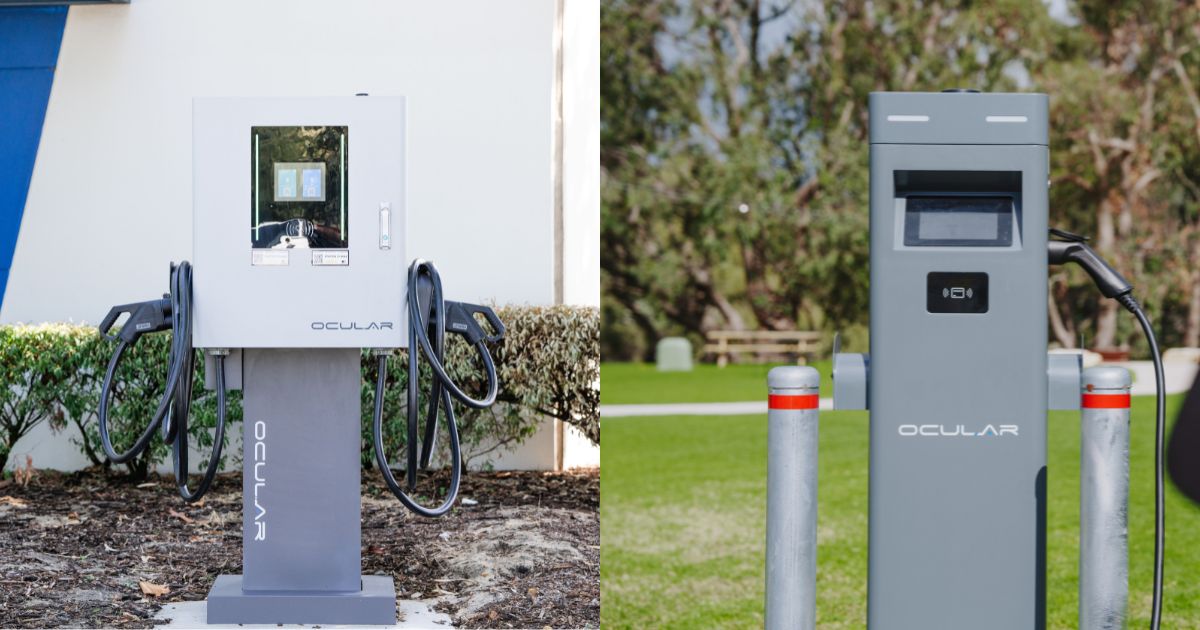
AC vs DC EV Chargers: Overview
What is AC Charging?
AC (alternating current) charging is the most common form of commercial EV charging in Australia. Power from the grid is delivered to the vehicle’s onboard charger, which converts it to direct current for the battery. AC chargers typically range from 7kW to 22kW and add between 40km and 120km of driving range per hour of charging.
This makes AC charging well suited to sites where vehicles remain parked for extended periods. Workplaces, apartment buildings, hotels, retail centres, and fleet depots all benefit from the lower installation costs and reduced electrical infrastructure requirements of AC solutions.
AC Charger Benefits
- Lower purchase and installation costs: AC chargers require less complex electrical work and are more affordable to deploy at scale.
- Simpler electrical requirements: Single-phase 7kW chargers work with standard electrical supplies; 11kW and 22kW options use three-phase power.
- Ideal for long dwell times: Perfect for workplaces where staff park for 8+ hours, or apartments where residents charge overnight.
- Scalable with load management: Multiple AC chargers can share available power across a site without expensive grid upgrades.
- Solar integration ready: AC chargers pair well with rooftop solar systems to reduce electricity costs and carbon footprint.
AC Charger Pros and Cons
Pros:
- Cost-effective hardware and installation makes it accessible for most commercial budgets.
- Reduced electrical infrastructure requirements mean faster deployment timelines.
- Compatible with smart charging software for scheduling, billing, and energy management.
Cons:
- Charging speeds may not suit high-turnover locations where vehicles park for less than two hours.
- 22kW chargers require three-phase power, which some older buildings may not have.
- Not designed for rapid top-ups on highways or service station forecourts.
What is DC Fast Charging?
DC (direct current) fast charging converts power before it enters the vehicle, bypassing the onboard charger and delivering energy directly to the battery. This allows for much faster charging speeds, with outputs ranging from 50kW at entry level through to 350kW or more for ultra-fast public networks.
A 50kW DC charger can add 150km to 200km of range in under an hour. Higher-powered units at 150kW and above can charge many EVs from 10% to 80% in as little as 20 to 30 minutes, making them essential for service stations, highway rest stops, and commercial sites with rapid vehicle turnover.
DC Fast Charger Benefits
- Rapid charging speeds: Vehicles can be charged to 80% in 20–45 minutes depending on charger output and vehicle acceptance rate.
- Revenue generation potential: High-turnover sites can serve more customers per day with DC infrastructure.
- Customer attraction: Destination businesses can draw EV drivers seeking a quick charge while they shop, dine, or rest.
- Fleet efficiency: Depots with tight schedules can turn vehicles around faster between shifts or routes.
- Futureproof infrastructure: Supports the growing number of EVs with larger batteries and higher charging acceptance rates.
DC Fast Charger Pros and Cons
Pros:
- Charges vehicles significantly faster than AC alternatives, serving more users per day.
- Attracts customers to retail and hospitality venues during short stops.
- Supports fleet operations with demanding schedules and high daily kilometres.
Cons:
- Requires three-phase power and more substantial electrical infrastructure than AC chargers.
- Installation may need council approval and civil works depending on site conditions.
- Draws higher peak power, which can affect electricity demand charges without proper energy management.
AC vs DC EV Chargers: In-Depth Comparison
Charging Speed and Dwell Time
The choice between AC and DC charging depends largely on how long vehicles will be parked. AC chargers at 7kW to 22kW are well matched to workplace charging where staff vehicles sit for a full shift, or apartment buildings where residents charge overnight.
DC fast chargers make sense when dwell times are under two hours. Service stations, fast food outlets, and highway rest stops need the speed that only DC can deliver. For mixed-use sites like shopping centres, a combination of AC and DC chargers can cater to both quick top-ups and longer visits.
Installation Requirements
AC chargers have simpler electrical requirements and lower installation costs. A single-phase 7kW charger can often be installed with minimal switchboard work, while 22kW three-phase units require more substantial wiring but remain straightforward for experienced installers.
DC fast chargers demand significantly more infrastructure. They require three-phase power with higher amperage, dedicated foundations or mounting solutions, and sometimes distribution network operator approval. EVSE Australia’s feasibility assessment service helps commercial sites understand their electrical capacity and identify the most practical charging solution for their circumstances.
Costs and Return on Investment
AC chargers deliver the most cost-effective solution for sites where vehicles park for extended periods. Hardware costs are lower, installation is simpler, and running costs are reduced. For a workplace with 20 staff vehicles that all need an overnight charge, a well-designed AC system with load management can meet the need without the investment that DC infrastructure demands.
DC fast chargers require higher initial investment but can generate revenue from paid public charging and attract customers to retail and hospitality venues. The return on investment depends on throughput: high-traffic highway sites and busy shopping centres can justify the cost, while lower-volume locations may find AC charging more practical.
Electrical Infrastructure and Load Management
Any commercial site installing multiple chargers needs to consider electrical capacity. AC chargers work well with load management systems that distribute available power across all charge points. This prevents multiple vehicles from drawing peak power simultaneously and overloading the switchboard.
DC fast chargers draw substantially more power per unit. Sites with limited electrical headroom may face costly grid upgrades to support DC infrastructure. However, strategic deployment of one or two DC units alongside AC chargers can provide rapid charging for customers who need it while managing overall site demand.
Software and Billing Capabilities
Both AC and DC chargers benefit from OCPP-compliant (Open Charge Point Protocol) software for remote monitoring, access control, and billing. EVSE Australia’s Exploren platform provides real-time visibility of charger usage, energy consumption, and automated reporting for commercial sites.
For workplaces and apartments, software allows you to restrict access to authorised users, allocate costs to individual tenants or departments, and schedule charging during off-peak periods. Retail and hospitality venues can set tariffs to recover costs or generate revenue from public users.
Comparison Table: AC vs DC EV Chargers for Commercial Sites
| Feature |
AC Chargers (7kW–22kW) |
DC Fast Chargers (50kW–350kW) |
| Charging Speed |
40–120km range per hour |
150–300km range in 30 minutes |
| Ideal Dwell Time |
2+ hours |
Under 1 hour |
| Installation Complexity |
Lower |
Higher |
| Electrical Requirements |
Single or three-phase |
Three-phase with higher amperage |
| Load Management Compatible |
✓ |
✓ |
| OCPP Software Support |
✓ |
✓ |
Which Charger Type Suits Your Site?
Workplace Charging
According to the Electric Vehicle Council’s 2025 EV Ownership Survey, workplace charging becomes increasingly important the more often staff commute. With vehicles parked for a full working day, AC chargers at 7kW to 22kW provide all the speed required while keeping costs manageable.
EVSE Australia’s workplace and fleet solutions include load management to run multiple chargers from existing electrical supply. The Ocular IQ Commercial range supports OCPP billing and access control, making it straightforward to manage staff charging or recover costs from visitors.
Apartment Buildings and Strata
Apartment EV charging presents unique challenges around electrical capacity, billing, and body corporate approval. AC chargers are the practical choice for residential buildings where vehicles charge overnight or during the day while owners are at work.
EVSE Australia’s apartment team can guide residents, strata managers, and developers through the process. Solutions range from individual chargers wired directly to tenancy meters through to shared infrastructure with software-managed billing. Load management ensures charging does not exceed building electrical limits.
Destination Charging for Retail and Hospitality
Hotels, shopping centres, restaurants, and tourist attractions benefit from offering EV charging to guests and customers. The right charger type depends on typical visit duration. Hotels and resorts where guests stay overnight suit AC chargers. Shopping centres and restaurants with 1–2 hour visits may benefit from a mix of AC and faster DC options.
Destination charging attracts EV drivers who specifically seek out venues where they can charge. With over 300,000 electric vehicles now on Australian roads and approximately one in ten new cars sold being an EV, providing charging infrastructure positions your business as a preferred destination for a growing market.
Public Charging and Service Stations
Public charging networks and service station forecourts require DC fast charging to serve drivers who need a quick top-up. EVSE Australia’s DC fast charger range includes options from 50kW through to ultra-fast units suited to highway locations and high-traffic sites.
For businesses considering becoming a public charging site host, EVSE Australia offers fully funded site host solutions where installation and maintenance costs are covered. This allows venues to offer fast charging without the upfront investment.
Fleet Depots and Heavy Vehicles
Fleet charging requirements depend on operational schedules. Depots where vehicles return overnight can use AC chargers with load management to charge entire fleets at lower cost. Operations with shorter turnaround times between shifts may need DC fast charging to get vehicles back on the road quickly.
EVSE Australia specialises in heavy vehicle and truck charging as well as electric bus depot solutions. These applications often require higher-powered DC chargers and careful planning around electrical infrastructure and depot layout.
Why EVSE Australia Is the Trusted Choice for Commercial EV Charging
EVSE Australia delivers complete end-to-end solutions for commercial EV charging across workplaces, apartments, destination venues, and fleet operations. With over 40,000 chargers installed and more than a decade of experience, the team brings proven expertise to projects of all sizes.
EVSE Australia develops its own hardware and software to ensure full accountability and overcome third-party limitations. The Ocular charger range covers single-phase AC units through to high-powered DC fast chargers, all OCPP compliant and compatible with the Exploren management platform. EVSE Shield maintenance packages provide ongoing support with proactive monitoring and priority service.
The combination of Australia’s most extensive charger range, certified nationwide installation, industry-leading warranties, and dedicated support makes EVSE Australia the trusted partner for commercial EV charging infrastructure. Request a free site assessment to find the right solution for your site.
FAQs: AC vs DC EV Chargers for Australian Commercial Sites
What is the difference between AC and DC EV charging?
AC charging delivers grid power to the vehicle’s onboard charger, which converts it to DC for the battery. DC fast charging converts power before it enters the vehicle, allowing faster charging speeds. AC chargers range from 7kW to 22kW, while DC chargers can exceed 350kW.
Which charger type is better for workplace charging?
AC chargers at 7kW to 22kW are ideal for workplace charging because vehicles are typically parked for a full shift. EVSE Australia’s workplace solutions include load management and OCPP billing to support multiple vehicles without overloading electrical supply.
Can apartment buildings install DC fast chargers?
Most apartment buildings are better suited to AC chargers due to electrical capacity limitations and longer dwell times. DC fast charging requires substantial infrastructure and is more appropriate for commercial sites with high vehicle turnover.
How does load management work with commercial EV chargers?
Load management distributes available electrical capacity across multiple chargers, preventing simultaneous peak draws that could trip breakers or exceed site limits. EVSE Australia’s Ocular Flexi Load Controller automatically adjusts charging rates based on real-time demand and available power.
Do I need three-phase power for commercial EV charging?
Single-phase power supports AC chargers up to 7.4kW. For 11kW, 22kW, or any DC fast charging, three-phase power is required. EVSE Australia’s feasibility assessment can determine your site’s electrical capacity and recommend appropriate charger options.
What ongoing maintenance do commercial EV chargers require?
OCPP-connected chargers can be monitored remotely with automatic fault alerts. EVSE Australia recommends annual physical inspections and offers EVSE Shield maintenance packages that include proactive monitoring, priority service, and detailed reporting for commercial installations.
-
Job Title - Co-Founder, EVSE Australia
11 years of EV charging deployment history
EV specialist, ev driver, member of AFMA, AEVA, EV Council, HVIA
Sam Korkees is the Co-Founder of EVSE Australia, a leading provider of electric vehicle (EV) charging infrastructure and solutions. Since co-founding the company in 2014 alongside Brendan Wheeler, Sam has played a pivotal role in scaling EVSE from an early-stage startup into a nationally recognised leader in EV charging.
EVSE has delivered some of the country's largest EV fleet and depot charging deployments, supporting the electrification of commercial fleets, logistics operations, and government assets. The company is also recognised as a leader in public charging infrastructure, with extensive experience in the rollout of fast and ultra-fast DC charging networks nationwide.
Sam works closely with government, utilities, and enterprise clients to design and implement scalable, future-ready charging solutions, helping accelerate the adoption of EVs across Australia.
Credentials: 11 years of EV charging deployment history, EV specialist, EV driver, member of AFMA, AEVA, EV Council, HVIA