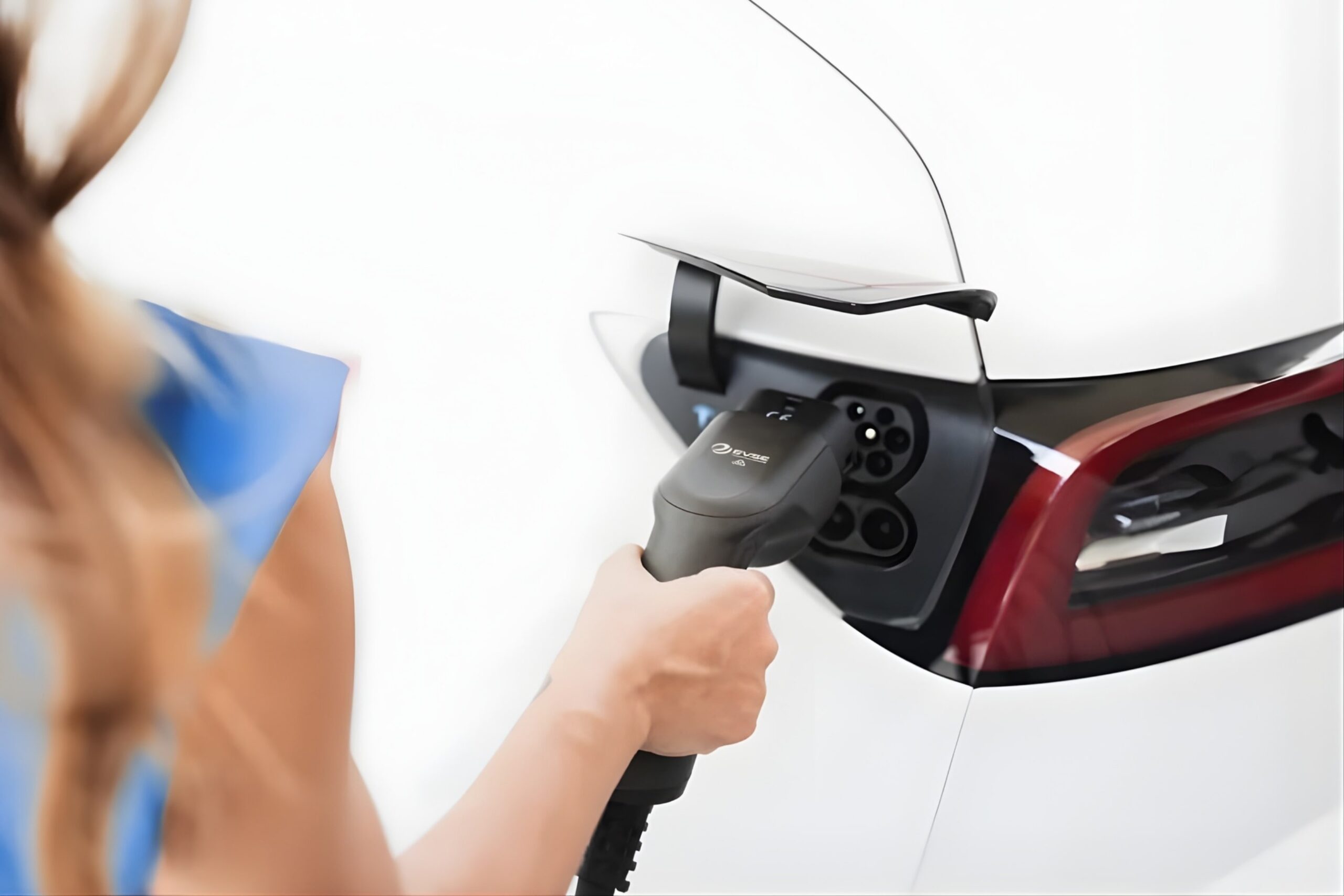
The time it takes to charge an EV at home depends on battery size and charger power. With a Level 2 charger, most EVs charge in 4 to 10 hours. A 7kW charger adds up to 45km of driving range per hour, while a 22kW charger adds up to 130km per hour on compatible vehicles.
- Most EVs are charged overnight.
- 7kW chargers suit single phase homes.
- 22kW chargers suit three phase homes.
- Charging speed depends on the vehicle’s onboard charger.
Charging speed explained
Charging time is determined by battery size, charger output and the vehicle’s onboard charging capacity. The vehicle controls the maximum charging rate.
Typical ranges:
- 7 kW: 8 to 10 hours.
- 22 kW: 5-6 hours on vehicles that support it.
Recommended chargers
- Ocular IQ Home with 5 metre cable: Best for reliable single phase charging with solar compatibility and smart features
- Ocular LTE Plus: Suitable for single phase and compact setups with a simple APP.
Comparison Table
| Power Output |
Charging |
| 7 kW |
Ideal for overnight charging. |
| 22 kW |
Fastest but depends on vehicle capability. Most vehicles AC speed does not reach 22kW but may be available in future models. |
Frequently Asked Questions
Is overnight charging enough?
Yes for most drivers.
Does three phase charge faster?
Yes up to 22kW which provides twice the driving range per hour of charge than a single phase 7kW charger.
Do all EVs charge at 22kW?
No, depends on onboard charger which is often 7 or 11kW.
-
Job title / role - CEO
Years of experience in EV charging or electrical work 11 years
Relevant credentials or certifications (e.g. licensed electrician, Clean Energy Council accreditation, EV specialist training, brand certifications) EV specialist, ev driver, member of AFMA, AEVA, EV Council, HVIA
Brendan Wheeler is Co-Founder and CEO of EVSE Australia, a vertically integrated EV charging provider. He leads the rollout of infrastructure across home, workplace and public charging. His focus is on building a connected platform that delivers reliable, commercially sustainable outcomes.