There’s a version of the EV charging conversation that stays politely surface-level. Someone mentions kilowatts, someone else mentions overnight charging, and everyone agrees it’s all very exciting. Then the electrician walks the site and the real conversation starts.
How much load can your switchboard actually take? Is the substation on your street sized for what you’re about to do? Have you spoken to your distribution network service provider yet? And if not, how long do you think that conversation is going to take?
For most small commercial installations, these questions have straightforward answers. For large-scale depot projects — the kind involving dozens of heavy vehicles, megawatt-scale demand, and infrastructure that has to survive years of daily use — they’re the questions that determine whether a project gets built on time, on budget, or at all.
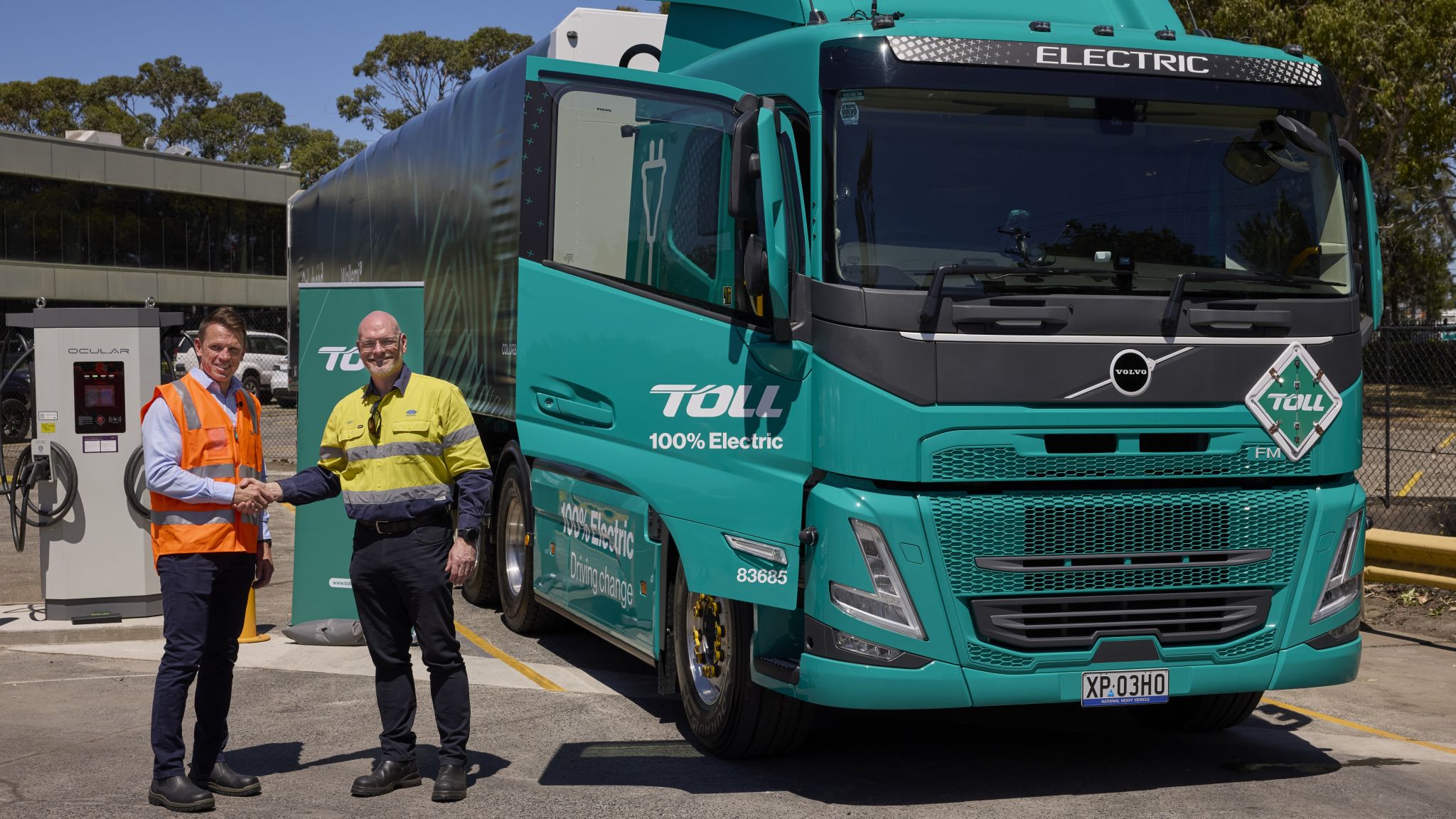
This article draws on EVSE’s experience delivering large-scale infrastructure projects, including work with Toll Group’s Project TruckVolt, to walk through what a genuine grid feasibility assessment involves and what organisations planning significant EV charging rollouts need to understand before they commit to hardware.
Why Grid Feasibility Is the First Conversation, Not the Last
Most organisations approach EV charging procurement the way they’d approach buying office furniture. They shortlist vendors, compare hardware specs, get quotes. The grid question gets asked somewhere in the middle, usually after a preferred supplier has already been selected.
This is backwards. The grid question should be asked first because the answer changes everything downstream — which chargers are viable, how many can be installed without a network upgrade, what the construction timeline will look like, and whether the total project cost ends up being $200,000 or $2 million.
The Australian electricity grid is managed by distribution network service providers (DNSPs) — Ausgrid and Endeavour Energy in NSW, AusNet in Victoria, Energex in Queensland, SA Power Networks in South Australia, and Western Power in WA. Before any high-load installation can proceed, the DNSP must be notified and, in most cases, approve the connection.
For a standard commercial installation drawing under 100kW, this process is relatively fast. For depot-scale projects drawing 500kW, 1MW or more, it is a formal technical assessment process that can take months and may require infrastructure works on the network side — works that the organisation installing the chargers is typically expected to fund.
Project TruckVolt context: Toll Group’s $67 million investment in battery electric heavy vehicles, supported by ARENA, required charging infrastructure across 10 distribution centres and customer sites nationally. The scale of the project meant that grid feasibility wasn’t a single conversation — it was a parallel workstream running alongside vehicle procurement from the start of the project.
What a Grid Feasibility Study Actually Covers
A grid feasibility study is a formal technical document that answers a specific question: can this site support the proposed electrical load, and if not, what would it take to get there?
The study looks at five interconnected areas.
1. Existing Site Electrical Capacity
Before anything else, an assessment is made of what the site’s existing infrastructure can support. This means reviewing the main switchboard, the incoming supply, any existing transformer on site, and the current demand profile of the building or depot.
For many industrial sites, particularly older ones, the switchboard was designed around the loads of ten or twenty years ago. A depot that runs diesel trucks doesn’t have the electrical demand of a depot running electric ones. Bringing the infrastructure up to speed is a real cost that needs to be quantified early.
2. Network Capacity at the Connection Point
Even if the on-site infrastructure can be upgraded, the question remains: can the distribution network at the street level provide the power? The DNSP will assess the capacity of the transformer servicing the site and the conductors running from it.
In dense industrial areas, network capacity is often constrained. Multiple large businesses drawing from the same transformer means headroom is limited. If the network can’t support the additional load, the DNSP may require a network augmentation — essentially an upgrade to their infrastructure — before the connection can be approved.
Network augmentations are not quick. They typically take six to eighteen months to plan and execute, and the cost is often passed directly to the organisation requesting the connection. For some sites, this single line item has cost hundreds of thousands of dollars.
3. Substation Integration Requirements
For truly large-scale installations — bus depots, heavy freight terminals, logistics hubs drawing megawatt-scale loads — a dedicated substation may be required rather than a standard low-voltage connection from the street.
A substation takes high-voltage supply directly from the transmission or distribution network and steps it down to a usable voltage on site. This is a substantial civil and electrical engineering undertaking. It involves high-voltage switchgear, transformer installation, protection equipment, and usually significant civil works including cable trenching, pits, and concrete housing for the equipment.
The advantage of a dedicated substation is control. The organisation owns the asset, has direct access to the supply without depending on street-level network capacity, and can manage the connection commercially. The disadvantage is cost and time — a substation project typically adds twelve to twenty-four months to the overall timeline and can add $500,000 to several million dollars to the project budget, depending on the required capacity and the site conditions.
Key planning consideration: The decision between a low-voltage network connection and a substation is not purely technical — it’s also a question of long-term site strategy. If a depot is expected to grow its electric fleet over five to ten years, designing for that future capacity from the start is almost always cheaper than retrofitting later.
4. High Voltage Civil Works
Whether or not a substation is required, large-scale EV charging installations typically involve high voltage civil works. This covers everything from cable trenching and duct installation to the civil preparation for any transformer pads, protection enclosures, and switchgear.
Civil works are often the most unpredictable cost element of a large project. The condition of the ground, the presence of existing underground services, the distances involved, and the access constraints at the site all affect the final cost in ways that can’t be fully predicted without detailed survey work.
For the Toll TruckVolt project, the combination of ten sites nationally meant that each location had its own civil conditions and DNSP requirements. Standardising the charger hardware didn’t standardise the infrastructure works — each site required its own assessment and design.
5. Load Forecasting and Future-Proofing
A grid feasibility study isn’t just about today’s load. It should model the load trajectory over the expected life of the infrastructure — typically ten to twenty years — and design the connection and on-site infrastructure to accommodate that growth without requiring a full rebuild.
For fleet operators mid-way through electrification, this means estimating not just the vehicles being charged now but the full electric fleet that’s planned. Installing a switchboard sized for fifty chargers when you’re only deploying twenty today costs more upfront but avoids a complete replacement in three years when the next vehicles arrive.
Active Load Management: The Engineering Solution to Grid Constraints
Even where network capacity is available, adding large numbers of chargers without managing their collective demand creates a different problem: peak demand charges. In most commercial electricity tariffs, a significant portion of the bill is calculated on the peak demand drawn from the grid in any given period — sometimes as short as thirty minutes.
A depot with forty chargers all operating at full capacity simultaneously creates a demand spike that has nothing to do with the total energy consumed. It’s a consequence of the timing. And that spike is what gets billed.
Active load management (ALM) software addresses this by treating the chargers as a controllable pool of demand rather than independent devices. The software monitors the site’s total electrical load in real time and allocates available charging capacity dynamically, ensuring the aggregate demand stays within a defined ceiling.
In practice, this means chargers don’t all run at full speed at once. They share the available capacity, adjusting individual charge rates based on vehicle priority, departure schedules, and the current building load. Vehicles that need to leave earliest charge first. Vehicles with more dwell time charge later or slower.
| Effect of ALM on infrastructure sizing |
Can reduce required incoming supply by 30–50% |
| Key standard for commercial ALM |
OCPP 1.6 / OCPP 2.0.1 compliance required |
| Typical peak demand reduction |
40–60% vs unmanaged charging |
| Applicability |
Any site with 5+ chargers; essential at 10+ |
EVSE’s implementation at Transport for NSW’s Macquarie Park development demonstrated this in a commercial office context. The system monitored building electricity consumption in real time, adjusting charge rates as building demand fluctuated. When the building was drawing heavily, charging slowed. When demand dropped, charging accelerated. The result was a larger number of chargers installed on a given electrical connection than would have been possible with static allocation.
For depot-scale projects, ALM is the difference between needing a $2 million substation and not. That’s not marketing language — it’s arithmetic.
The DNSP Conversation: Timing Is Everything
Most organisations understand they need to talk to their electricity network operator at some point. What they underestimate is how much the timing of that conversation affects the project.
DNSPs in Australia are regulated businesses with formal connection application processes. They have their own engineering teams, their own timelines, and their own approval workflows. A large connection — anything drawing more than around 500kW — goes through a technical review process that the DNSP controls.
Starting that conversation six months into a project is starting it too late. The DNSP review period alone can take several months. If augmentation is required, add the construction period. If a substation is required, add the lead time for high-voltage switchgear and transformers, which in the current market can run to twelve months or more.
Projects that start the DNSP conversation at the same time as the vehicle procurement — not after — build the network timeline into the project plan from the start. Projects that don’t often find themselves with vehicles arriving and nowhere to charge them.
Hard-earned insight from large-scale projects: The DNSP timeline is not negotiable and cannot be compressed by paying more. It is a fixed variable in the project plan. Treat it accordingly.
Practical Implications for Fleet and Infrastructure Planners
A few things worth taking away from this, regardless of whether you’re planning a ten-charger depot installation or a hundred-charger terminal.
Commission a site assessment before selecting hardware
The assessment defines what’s possible. The hardware selection follows. Doing it the other way around creates situations where preferred equipment can’t be supported by the available infrastructure.
Get the DNSP conversation started immediately
Not when you’re ready to build — now. Enquire about the connection capacity at the site. Ask about the application process for large connections. Start building the relationship with the network operator because you will need it.
Budget for the infrastructure, not just the chargers
The charger hardware is often the smallest component of a large-scale project budget. Civil works, switchboard upgrades, cable, protection equipment, DNSP connection fees, and potentially substation construction dwarf it. Projects that budget only for chargers end up with budget surprises.
Design for the fleet you’ll have in ten years, not the one you have today
Electrical infrastructure is not cheap to replace and not easy to upgrade incrementally. Designing for future capacity from the start, even if that means slightly larger conduits and a bigger switchboard, is almost always the better economic decision over a ten-year horizon.
Work with an integrator who understands the full stack
Grid feasibility, DNSP engagement, civil works, charger hardware, load management software, OCPP configuration, and ongoing monitoring are all interconnected. Organisations that manage them as separate contracts from separate vendors create coordination problems that cost time and money. An end-to-end provider who has done this at scale — on projects like TruckVolt — carries institutional knowledge that individual vendors don’t.
The Toll Group project is the clearest available demonstration in Australia of what large-scale fleet electrification actually involves at the infrastructure level. The $67 million investment was never just about buying electric trucks. It was about building the energy systems capable of supporting them, across ten sites, under real-world logistics constraints. That’s the context in which grid feasibility and substation integration matter — not as technical footnotes, but as the foundation on which the whole project sits.
-
Job title / role - CEO
Years of experience in EV charging or electrical work 11 years
Relevant credentials or certifications (e.g. licensed electrician, Clean Energy Council accreditation, EV specialist training, brand certifications) EV specialist, ev driver, member of AFMA, AEVA, EV Council, HVIA
Brendan Wheeler is Co-Founder and CEO of EVSE Australia, a vertically integrated EV charging provider. He leads the rollout of infrastructure across home, workplace and public charging. His focus is on building a connected platform that delivers reliable, commercially sustainable outcomes.