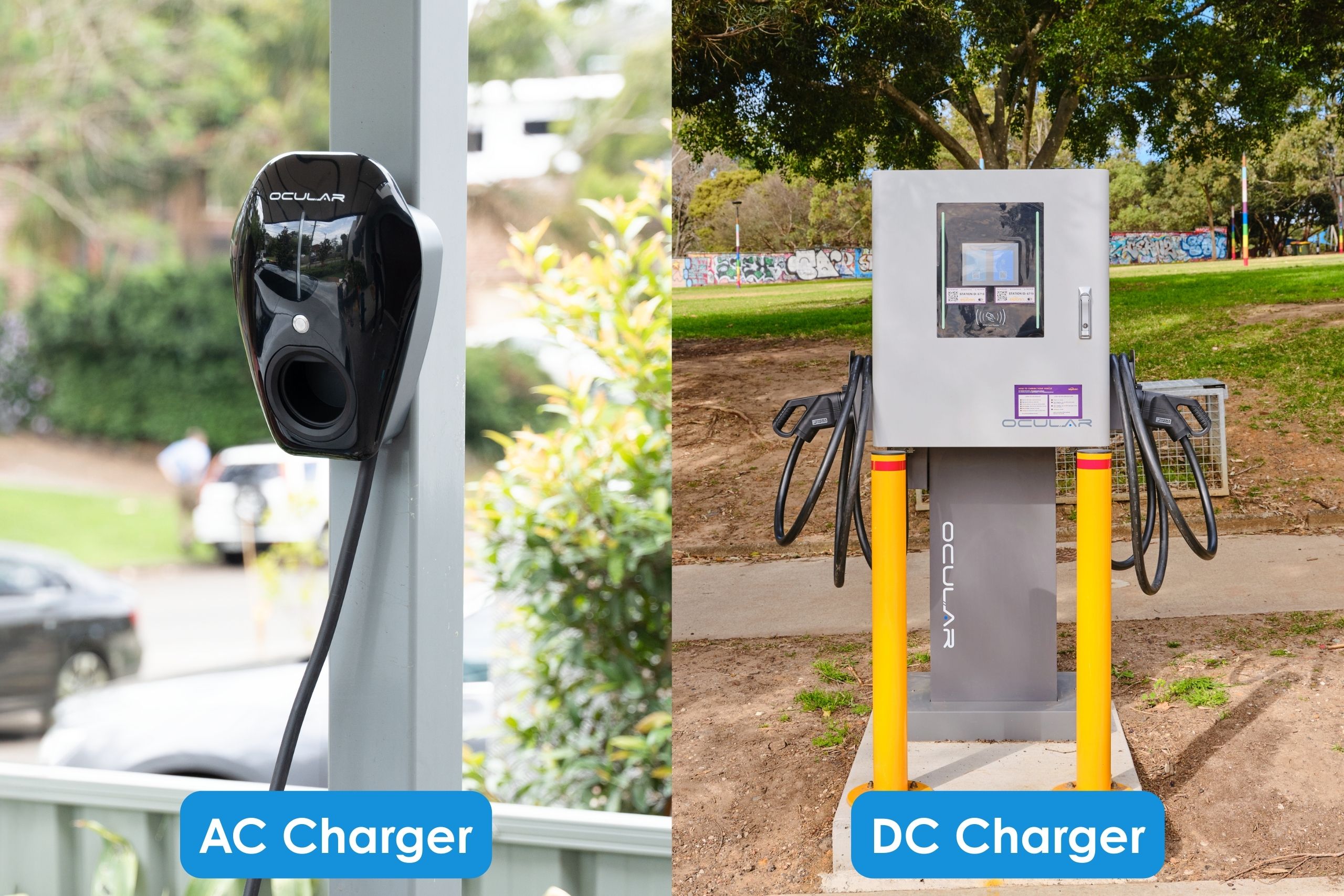
AC vs DC Chargers

Featured Image

AC chargers supply alternating current and are used for home charging at speeds from 7kW to 22 kW. DC chargers supply direct current and are used for fast commercial charging from 25 to 420 kW. Homes use AC chargers while many businesses and public sites use DC chargers.

  • AC chargers are for homes.
  • DC chargers are for commercial fast charging.
  • AC power is converted to DC inside the vehicle which then charge the vehicle’s battery.
  • DC chargers bypass the onboard charger by converting electricity before reaching the vehicle.

AC chargers explained

AC chargers are the standard home charging method. They rely on the vehicle’s onboard charger to convert AC to DC. This limits the speed to between 7kW and 22kW depending on the vehicle and supply type.

DC chargers explained

DC fast chargers convert AC to DC externally and feed power directly to the battery. This enables very high charging speeds but requires large electrical infrastructure which is not suitable for homes.

Recommended models

AC: Ocular IQ Home Solar Universal and Ocular LTE Plus.

DC: Ocular Titan or Ocular Atlas

Comparison Table

Power Output Applications </th
AC 7 to 22 kW Suitable for homes & light fleets.
DC 25 to 420 kW Suitable for commercial applications & public charging.

Frequently Asked Questions

Can I install DC at home?

No, power requirements are too high

Is AC safe outdoors?

Yes with weather rated units such as Ocular chargers.

Do all EVs support DC?

Yes all current EVs do, but speeds vary depending on the vehicle.

Does DC charging harm batteries?

DC charging has a very small effect on battery health compared to AC charging, especially for average EV drivers. There is a greater effect on wear and tear for vehicles operating high-use duty cycles similar to high-use petrol vehicles.

Not sure which AC charger is right for your home? Get a tailored installation quote today. Or choosing between AC and DC charging for your business? Request a tailored commercial quote today. 

Author

Share this Article

Electric Vehicles Spell the End of OPEC with EV Charging Stations

OPEC which stands for the Organization of the Petroleum Exporting Countries is predicting that 94% of cars on the road will still be powered by oil in 2040.OPEC has a colourful history and lets look at some of it predictions in the past– in the past it predicted Oil Prices in 2015 to average $120USD a barrel– […]
Read More

Net Zero Plan EV Incentives

Net Zero Plan Stage 1: Incentives for EV Uptake & Charging in NSW The NSW Government has set an ambitious target of zero emission by 2050. The Net Zero Plan Stage 1: 2020–2030 aims to accelerate the reduction in emissions this decade and prepare the States policy over the next 30 years. As part of […]
Read More

Find the right charger

Tell us about your car and home to see recommendations.

Get the best price

Stocking the best Electric Car products from the World’s leading brands.

Reliability

All of our EVSE products are compliant with Australian & International standards.