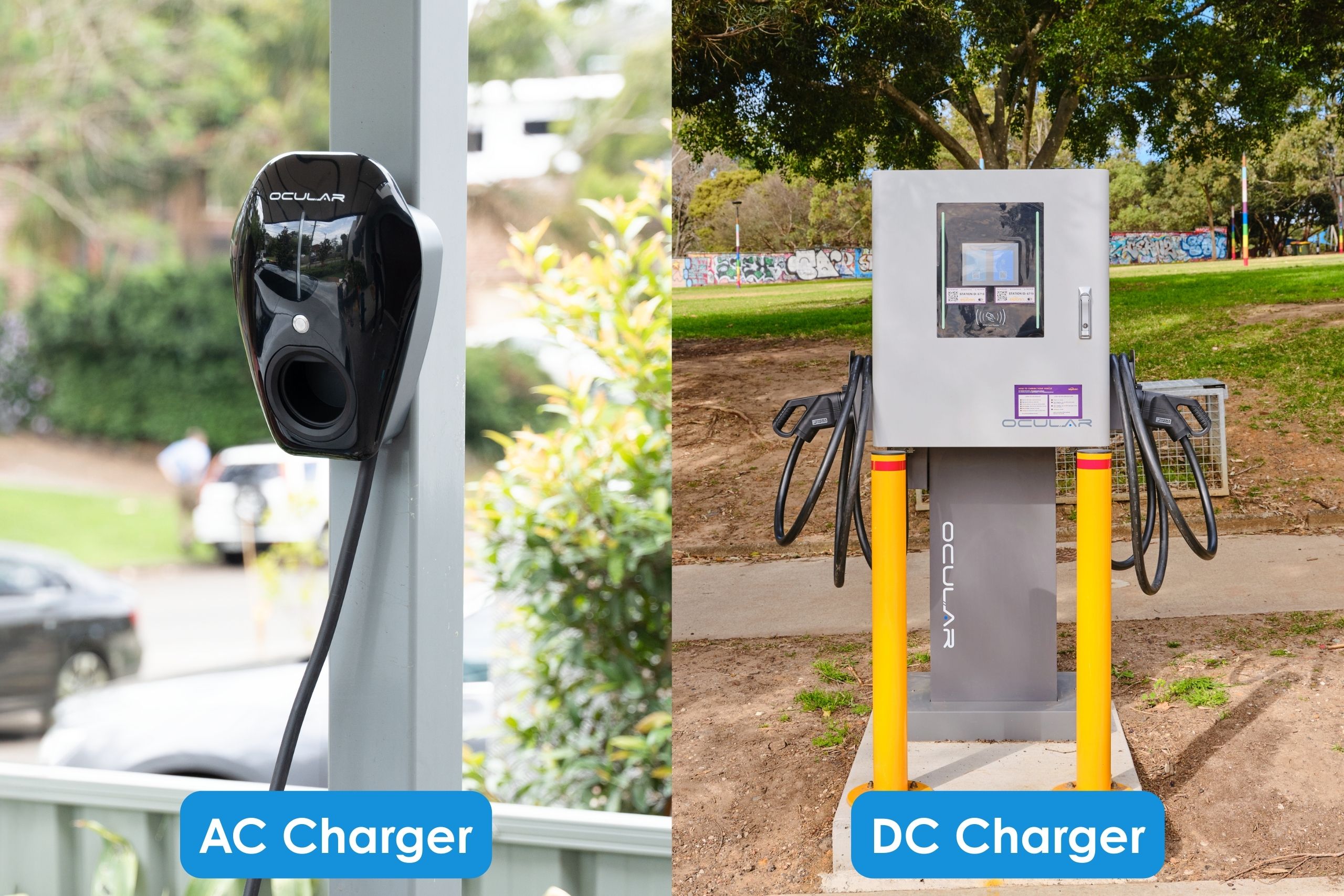
AC chargers explained
AC chargers are the standard home charging method. They rely on the vehicle’s onboard charger to convert AC to DC. This limits the speed to between 7kW and 22kW depending on the vehicle and supply type.
DC chargers explained
DC fast chargers convert AC to DC externally and feed power directly to the battery. This enables very high charging speeds but requires large electrical infrastructure which is not suitable for homes.
Recommended models
AC: Ocular IQ Home Solar Universal and Ocular LTE Plus.
DC: Ocular Titan or Ocular Atlas
Comparison Table
| Power Output |
Applications </th |
| AC 7 to 22 kW |
Suitable for homes & light fleets. |
| DC 25 to 420 kW |
Suitable for commercial applications & public charging. |
Frequently Asked Questions
Can I install DC at home?
No, power requirements are too high
Is AC safe outdoors?
Yes with weather rated units such as Ocular chargers.
Do all EVs support DC?
Yes all current EVs do, but speeds vary depending on the vehicle.
Does DC charging harm batteries?
DC charging has a very small effect on battery health compared to AC charging, especially for average EV drivers. There is a greater effect on wear and tear for vehicles operating high-use duty cycles similar to high-use petrol vehicles.