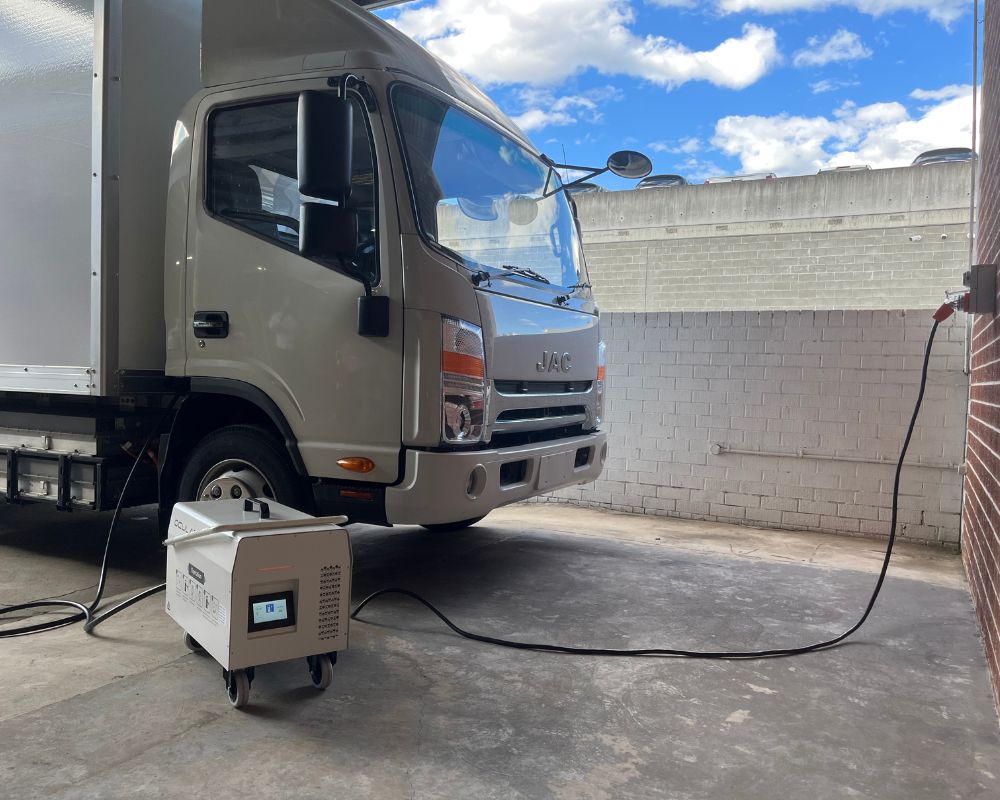
Electric heavy-duty trucks are revolutionising the transportation industry, offering a sustainable alternative to traditional diesel vehicles. Beyond environmental benefits, the economics of electric trucks, particularly the total cost per kilometer driven, make them a compelling choice for business looking toward the future.
Traditional heavy-duty trucks contribute significantly to CO2 emissions, with over 25% of total emissions from road transport. Recognising the urgency of climate change mitigation, global initiatives are propelling the electrification of heavy-duty trucks. Electric trucks, emitting zero tailpipe emissions, stand as a crucial component of clean mobility solutions.
Charging infrastructure:
Charging an electric truck is facilitated primarily by DC fast chargers connected to the electric grid or alternative power sources. The flexibility of charging scenarios, whether overnight, at a warehouse destination, or on-the-move along highways, provides operational convenience for businesses. The charging time, ranging from 30 minutes to 8 hours, depends on the chosen scenario. Ocular’s DC Roam Portable Charger is extremely efficient at charging trucks and other heavy vehicles on the go.
The Total Cost Ownership Advantage:
While the initial investment in an electric truck is higher compared to traditional ICE (internal combustion engine) trucks, the long-term financial gains are significant. One key metric driving adoption is the total cost per kilometer driven. Electric trucks prove their worth over time by paying off the initial investment through lower ‘fueling’ costs, reduced maintenance expenses, and various incentives. Reduced fuel costs not only translate into immediate savings but also shield businesses from the volatility of fossil fuel prices. Maintenance savings, courtesy of fewer moving parts, not only decrease ongoing operational expenses but also increase the overall lifespan of the vehicle.
In conclusion, the transition to heavy-duty trucks is not merely an environmental necessity but a financially savvy decision for businesses. As global initiatives drive electrification, the economic advantages, including reduced fuel costs, maintenance savings and government incentives, position electric trucks as the future of sustainable and cost-effective heavy-duty transportation. The initial investment may be higher, but the journey toward total cost ownership parity is well underway, making electric trucks a wise investment for businesses committed to both profitability and environmental responsibility.
For more information about the considerations and opportunities of heavy vehicle electrification, download our Heavy Vehicle White Paper here.
Want to learn more? Contact us:
1300 406 210
[email protected]