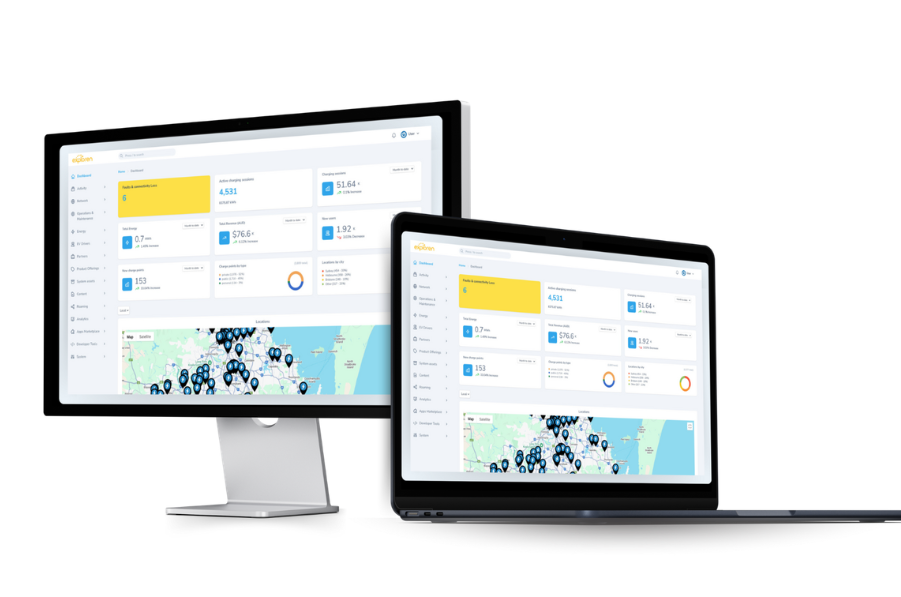
As Australia’s EV adoption accelerates, charging networks are becoming more complex and data-driven. In 2026, EV charging analytics is no longer optional, it is essential for improving uptime, profitability, grid stability and user experience.
Charging operators, businesses and fleet managers are now relying on real-time data to optimise infrastructure performance and plan future expansion.
Quick Answer: What Is EV Charging Analytics?
EV charging analytics refers to the collection and analysis of data from charging stations to:
- Improve charger reliability
- Plan infrastructure expansion
It transforms raw charging activity into actionable insights.
1. Improving Charger Uptime and Reliability
Downtime damages user trust. Analytics platforms help operators track:
- Fault codes and error rates
By identifying recurring technical issues early, operators can schedule preventative maintenance instead of reacting to breakdowns. Higher uptime directly improves customer satisfaction and revenue.
2. Understanding Usage Patterns
Charging data reveals when and how people charge. Key metrics include:
- Energy dispensed per session
- Location-based demand trends
For example, retail sites may see peak usage during business hours, while fleet depots may charge overnight. This insight allows smarter infrastructure deployment and expansion planning.
3. Managing Grid Demand and Energy Costs
With electricity tariffs increasingly structured around peak demand, analytics plays a major role in cost control. Operators can:
- Identify high-demand spikes
- Implement load balancing strategies
- Optimise time-of-use charging
- Integrate solar and battery systems
Smart demand management aligns with Australia’s broader energy transition policies led by the Department of Climate Change, Energy, the Environment and Water
https://www.dcceew.gov.au/energy/transport
Data-driven load control also helps reduce grid stress during peak periods.
4. Supporting Government & Sustainability Reporting
Many businesses now track Scope 1, 2 and 3 emissions. Charging analytics helps organisations:
- Track renewable energy usage
- Report on fleet electrification progress
- Align with federal transport decarbonisation strategies
National EV policy updates can be found via the National Electric Vehicle Strategy:
https://www.dcceew.gov.au/energy/transport/national-electric-vehicle-strategy
Clear reporting strengthens ESG performance and investor confidence.
5. Forecasting Expansion and ROI
One of the most powerful uses of analytics is predictive planning. By analysing historical data, operators can:
- Forecast charger demand growth
- Determine ideal charger types (AC vs DC)
- Identify underperforming sites
- Calculate return on investment
Instead of guessing, networks can scale strategically.
The Future: AI-Driven Charging Networks
In 2026, advanced networks are beginning to use machine learning to:
- Automatically adjust charging rates
- Improve customer wait times
As EV penetration increases across Australia, analytics will become the backbone of efficient, profitable and resilient charging infrastructure.
Final Thoughts
EV charging analytics transforms infrastructure from static hardware into an intelligent energy ecosystem. Networks that leverage data will achieve higher uptime, lower costs and smarter expansion.
For charging providers and fleet operators alike, data is now one of the most valRuable assets in the EV transition.
-
Job Title - Co-Founder, EVSE Australia
11 years of EV charging deployment history
EV specialist, ev driver, member of AFMA, AEVA, EV Council, HVIA
Sam Korkees is the Co-Founder of EVSE Australia, a leading provider of electric vehicle (EV) charging infrastructure and solutions. Since co-founding the company in 2014 alongside Brendan Wheeler, Sam has played a pivotal role in scaling EVSE from an early-stage startup into a nationally recognised leader in EV charging.
EVSE has delivered some of the country's largest EV fleet and depot charging deployments, supporting the electrification of commercial fleets, logistics operations, and government assets. The company is also recognised as a leader in public charging infrastructure, with extensive experience in the rollout of fast and ultra-fast DC charging networks nationwide.
Sam works closely with government, utilities, and enterprise clients to design and implement scalable, future-ready charging solutions, helping accelerate the adoption of EVs across Australia.
Credentials: 11 years of EV charging deployment history, EV specialist, EV driver, member of AFMA, AEVA, EV Council, HVIA