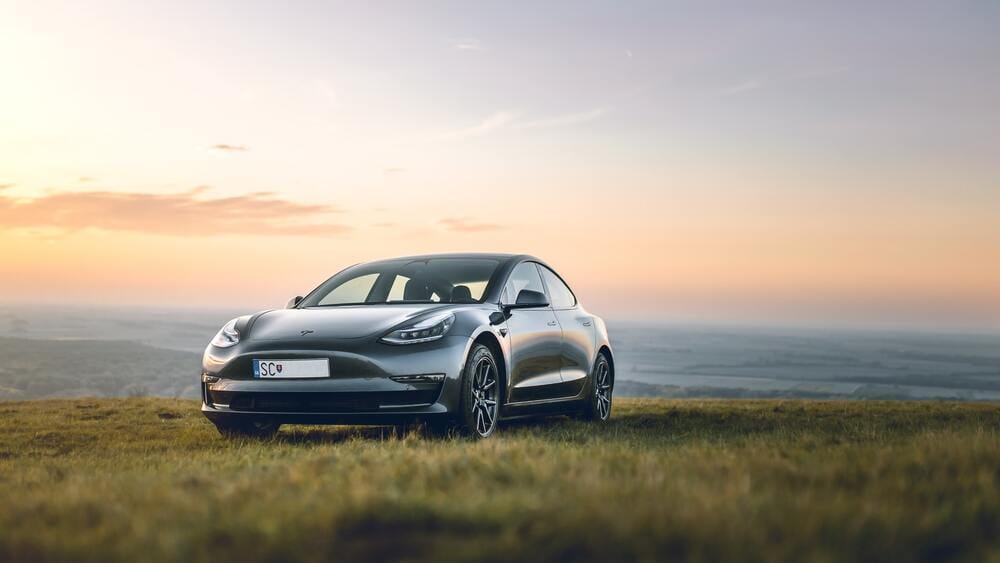
One of the major resistances of owning an electric vehicle is charging your electric car, but how about not charging it? How long can you leave your EV inactive, and how much charge will you lose? Keep reading to find out.
Anything being left unused for too long may develop issues, which goes for internal combustion cars too. Whilst most people use their car every day, some people may do a fair bit of travel throughout the year and/or recently go nowhere because of the travel restrictions. So is an electric vehicle more beneficial because there are fewer moving parts?
In short, yes. Because of the reduced mechanical components on an electric vehicle, the major serviceable element on an electric car, other than topping it up with washer fluid once a year, is the condition of the battery.
If you know you are going to be leaving your EV undriven for an extended time, here is a list of things you need to consider:
Where to store the car
If there is one thing lithium-ion batteries don’t like, it is hot weather. Especially in Australia, where summer could reach up to 40 degrees in extreme cases, the battery may suffer a slight but irreversible loss of its total capacity. However, this degradation is relatively insignificant compared to the wear caused by the constant charging and discharging of the batteries. Nevertheless, it’s recommended that you always try to store an electric vehicle undercover to shield it from the natural elements.
Should I leave the car plugged in?
It is important to note that even when an EV is not being driven, the battery will still discharge very slowly to power the onboard electronics. The battery can discharge at a rate of approximately 1 per cent per day. However, the discharge rate may vary depending on environmental factors (such as hot weather) and vehicle configurations (such as activating sentry mode on Tesla).
Some car manufacturers such as Hyundai and Tesla claim that you can leave the car plugged during inactive use as the car’s battery management system will still ensure everything is kept in check. Other EV manufacturers, such as Nissan, recommend leaving the car unplugged for the duration of inactivity.
As a standard rule of thumb, it’s recommended that the battery level is always maintained between 50% – 80%. Whether to leave the car plugged in or not, this is best to refer to the manufactured guidance as all electric cars are made differently and may have different battery management systems in place.
What charger will I need?
The best way to charge your car over an extended period is a trickle charger. Most electric vehicles come with a 10amp Portable Charger, also known as a trickle charger, from the manufacturer. These are designed to plug into a standard 10 amp powerpoint and provide approximately 10km of driving range per hour of charge.
At the end of the day, whether you leave your electric car plugged in or not, the combined safety feature of the charger and the onboard battery management system is smart enough to stop and start charging sessions to ensure minimal damage to the battery. The main factor to consider is ensuring the car is stored in a secured environment where temperatures are moderate.
To find out more about which charging solution is best for your particular application, feel free to reach out to the team at evse.com.au, and one of our EV experts will be able to guide you through the products and find the most suitable solution for you.
-
Sam Korkees is the Co-Founder of EVSE Australia, a leading provider of electric vehicle (EV) charging infrastructure and solutions. Since co-founding the company in 2014 alongside Brendan Wheeler, Sam has played a pivotal role in scaling EVSE from an early-stage startup into a nationally recognised leader in EV charging.
EVSE has delivered some of the country's largest EV fleet and depot charging deployments, supporting the electrification of commercial fleets, logistics operations, and government assets. The company is also recognised as a leader in public charging infrastructure, with extensive experience in the rollout of fast and ultra-fast DC charging networks nationwide.
Sam works closely with government, utilities, and enterprise clients to design and implement scalable, future-ready charging solutions, helping accelerate the adoption of EVs across Australia.
Credentials: 11 years of EV charging deployment history, EV specialist, EV driver, member of AFMA, AEVA, EV Council, HVIA