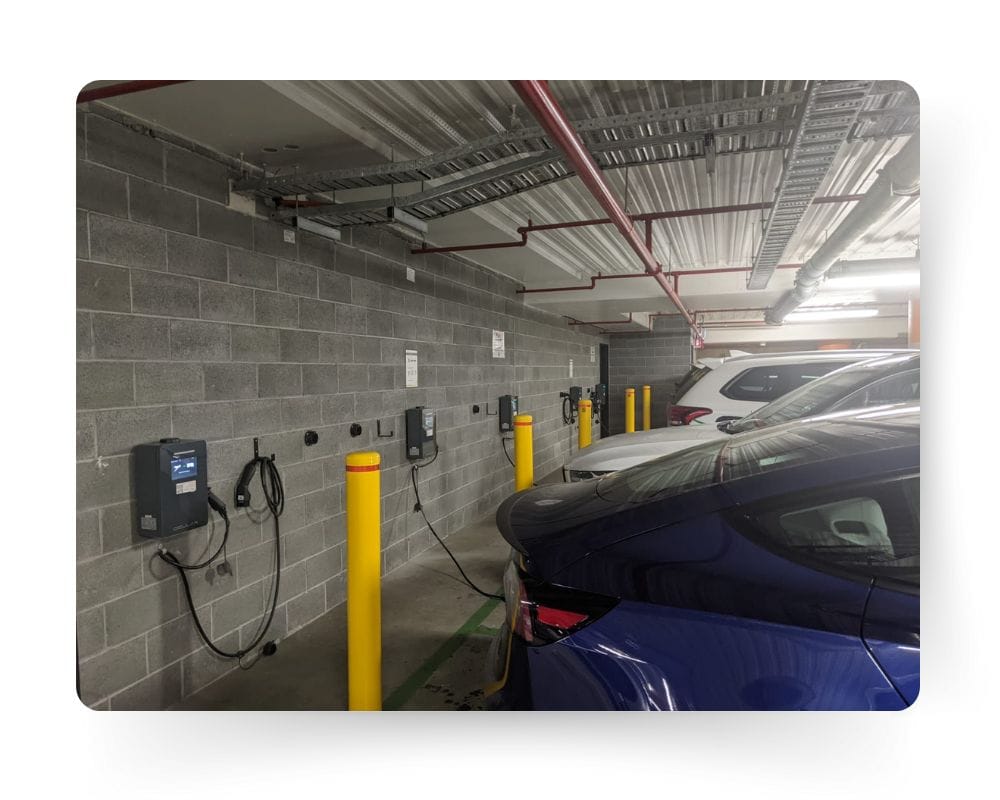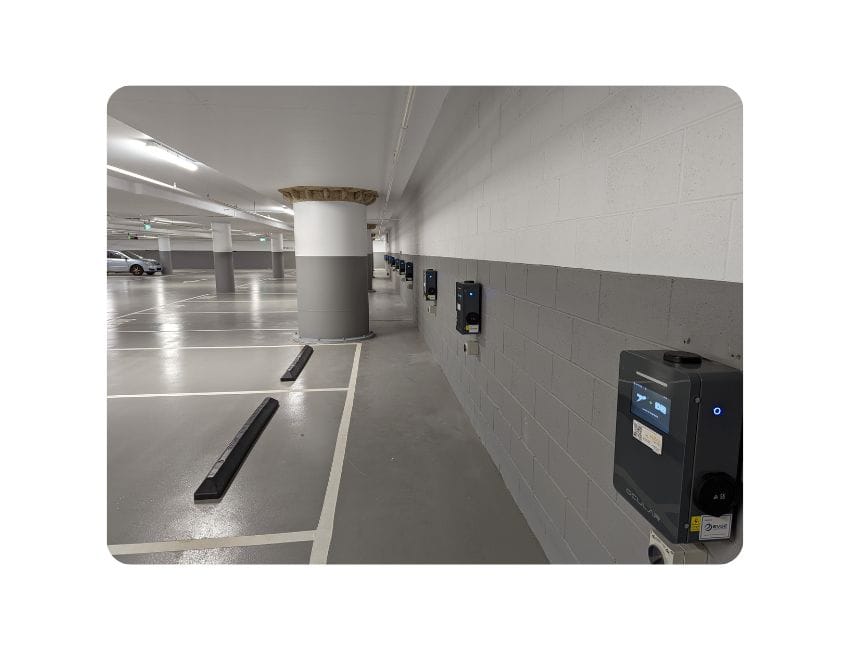
Property Developer Landing Page Banner

EV Charging Solutions for Property Developers

EVSE offers end-to-end solutions designed specifically for property developers, providing seamless EV charging infrastructure for all apartment buildings across Australia.

Our EV Solutions are Trusted by Some of Australia's Biggest Brands

Google
Uts
University Of Qld
Meriton2015
kia ev charging
Ldv12
Actewagl Logo Green
Adelaide airport
Brisbane City Council
Hyundai Motor Company Logo.svg
Queensland
Mirvac

EV Charging for units and high-rise apartments

With over 2.5 million Australian’s living in apartments and EV adoption on the rise, property developers are increasingly facing the challenge of equipping apartment buildings with EV chargers.

These installations come with a unique set of challenges, including:

  • Limited electrical capacity
  • Significant upfront capital costs
  • Design complexity
  • Installation and Deployment
  • Maintenance and ongoing servicing
  • Billing Support

Let EVSE simplify your transition to electric vehicle charging with our turnkey solutions, making it easy and hassle-free.

View our apartment charging brochure

EV Charging Commercial
GET AN ASSESSMENT

Apartment Charging

Complete the enquiry form to get started on chargers at your apartment building

Start Assessment
Proposal
Hardware
Software
Installation
EV charger installation in new apartment development car park

National Construction Code (NCC) – Is your Building EV Ready?


EVSE teams up with Alan Margaris from Intrax to explore one of today’s most pressing topics: electric vehicle (EV) charging in relation to the 2022 National Construction Code (NCC). This discussion addresses the critical considerations for making apartments EV ready, providing valuable insights into regulatory compliance and technical requirements.

Key topics include mandates for brownfield sites, the minimum requirements for installing EV chargers in apartment complexes, and whether a substation is needed for large-scale charger deployment. We also explore the importance of understanding charging speeds, and how to manage electricity reimbursement of shared or public chargers.

Join us for an in-depth discussion, packed with expert knowledge to help you navigate the evolving landscape of EV infrastructure within the framework of the NCC.


EV Charging Commercial
EVSE PRO

Charging-as-a-Service

Scalable EV charging through one predictable monthly subscription

Find out More
No Large Upfront Investment
Less Complexity, More Time
Reliable Charging When You Need It
Built to Grow With You
Property Developer Caas Charging

How it works

Fill Enquiry
Fill Enquiry Form

Fill the form below with the details of your site so we can evaluate the next steps.

Evse Will Contact
EVSE contacts you

Our specialised apartment team will contact you to discuss your completed form.

Site Inspection
Site Inspection

Depending on your building, a site visit may be required to finalise the requirements and price for your EV charger installation.

Feasibility
Feasibility/ Proposal

Once the costs have been calculated you will receive a quote for your EV charger installation.

Installation
Installation

Once you’ve accepted your quote your installation will be scheduled and completed.

Design | Hardware | Installation | Software

Easily implement the world’s smartest EV Charging in all Your Construction Projects

Universal

Our chargers are compatible with every EV in Australia. Includes Tesla, MG, Nissan, Hyundai, KIA, and more!

Green Star Rating

Achieve a green star rating by implementing 5% of car parks as EV-ready.

Electric Engineer Design and Consultations

Our engineers can assist your architects, engineers, and electricians implement and scope our system.

Warranty

2-year warranty on all our equipment with the option to extend.

Installation

Optional installation service or free training for your preferred installer.

Energy Management System

Load management as standard to easily manage electricity loads and balance supply.
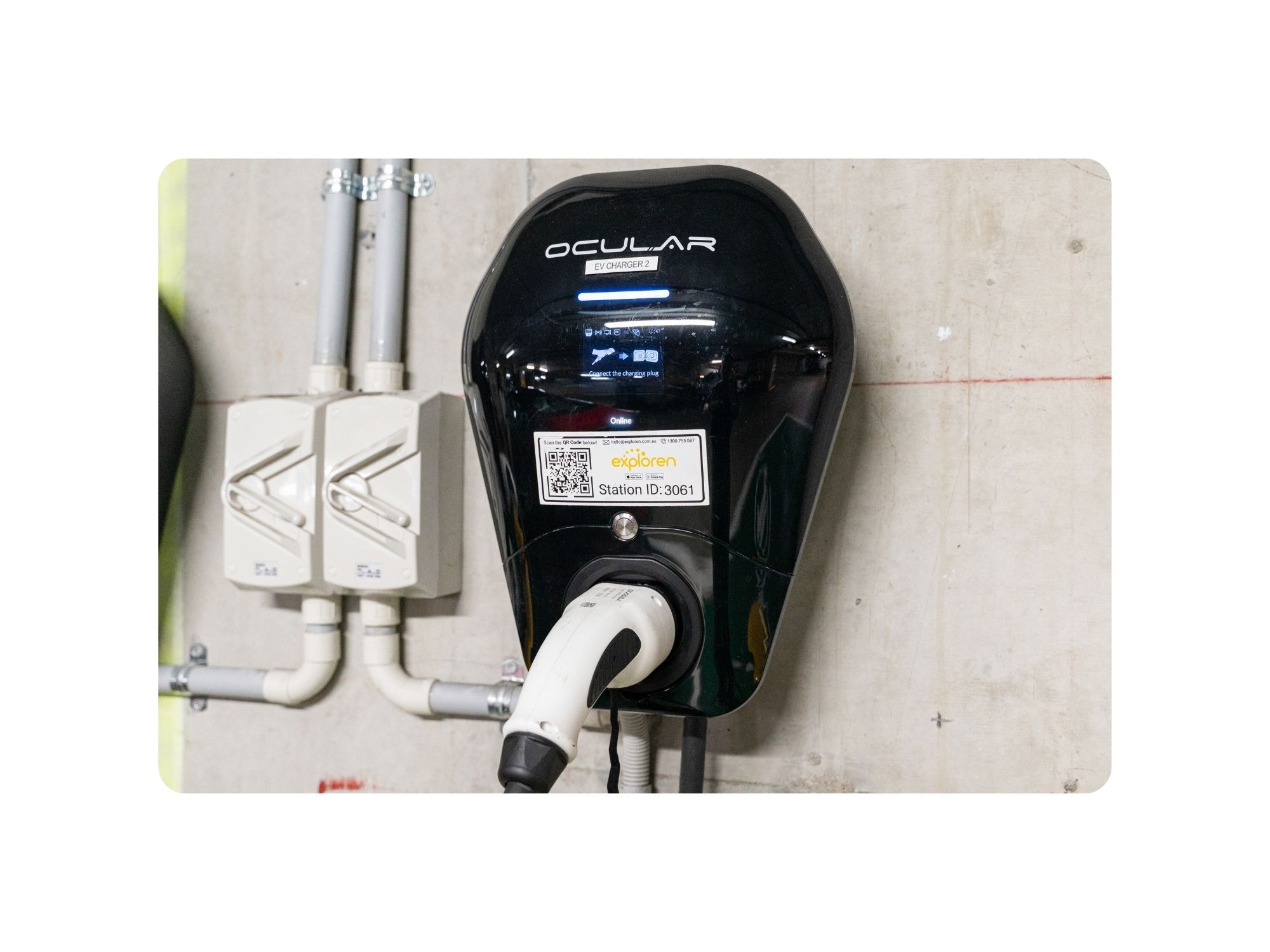
Why EV-Ready Matters for Your Development


  • Meets NCC 2022 EV-ready requirements for new builds where applicable
  • Supports Green Star and sustainability ratings targets
  • A genuine point of difference for buyers and renters comparing developments
  • Reduces the risk of costly retrofits once the building is occupied

Common Approaches to EV Chargers


Common approaches to the implementation of EV charging in common areas come in 2 ways:

  • Visitor charging bays
  • Installation of chargers for each private residential parking bay

Understanding what you require can help guide EVSE in providing our customers with a solution that solves their short- or long-term electrification needs.


EV Charging for New Developments: NCC 2025 Compliance, EV-Ready Infrastructure and Developer Solutions

The National Construction Code 2025 introduced EV charging requirements for new residential and commercial developments in Australia, and created significant confusion about exactly what’s required, when, and in which states and territories.

EVSE works with property developers, builders, and project managers across Australia to navigate NCC compliance, design EV-ready electrical infrastructure, and deliver practical charging installations that meet regulatory requirements without over-engineering the solution.
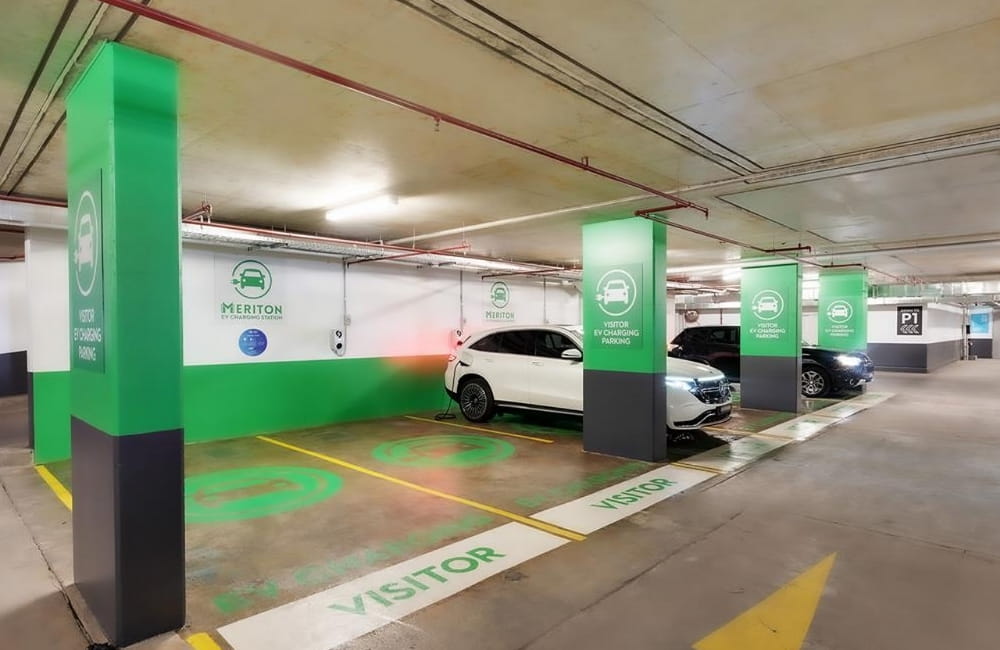
What the NCC 2025 Actually Requires

The NCC 2025 introduced provisions requiring new Class 2 buildings (apartments and multi-residential) and certain commercial developments to include EV charging infrastructure. The provisions operate at two levels: requirements for EV charging-ready electrical infrastructure (conduit, wiring capacity, switchboard provisions) and requirements for installed charging equipment in some jurisdictions.

Critically, the NCC provisions are adopted and implemented differently by each state and territory, meaning the exact requirements that apply to a specific project depend on where it’s located and when construction commenced.

Victoria Adopted NCC 2025 EV provisions. New Class 2 buildings require EV-ready infrastructure from May 2024.
NSW Adopted NCC 2025. Requirements apply to new developments lodged after the relevant commencement date.
Queensland Adopted with some modifications. Verify current requirements with the local building authority.
Western Australia Adopted NCC 2025 with local modifications. WA-specific provisions apply.
South Australia Adopted NCC 2025. Requirements mirror national provisions.
ACT Has maintained separate requirements. Verify current requirements with ACT Planning.
NT & TAS Adopted. Verify local application with the relevant authority.
Important: NCC compliance requirements for EV charging continue to evolve, and state-level adoption varies. The information above is current as of mid-2026 but should be verified against the current NCC and relevant state building authority guidance for any specific project. EVSE’s compliance team can advise on current requirements for your project location.

EV-Ready vs EV-Installed: What’s the Difference?

The NCC 2025 distinguishes between two levels of provision:

EV-ready means the building’s electrical infrastructure is designed and installed to support future EV charging, conduit, cable capacity, switchboard provisions, without the actual charger hardware being installed at construction. This is the minimum requirement for most new developments and allows individual owners or tenants to install chargers without requiring major infrastructure works.

EV-installed means charger hardware is installed at construction, ready for use on occupancy. Some commercial developments and certain residential applications are required to include installed chargers, not just EV-ready infrastructure.

Getting this distinction right for a specific project is important. Over-specifying increases construction cost unnecessarily. Under-specifying creates compliance exposure and retrofit costs for future owners.

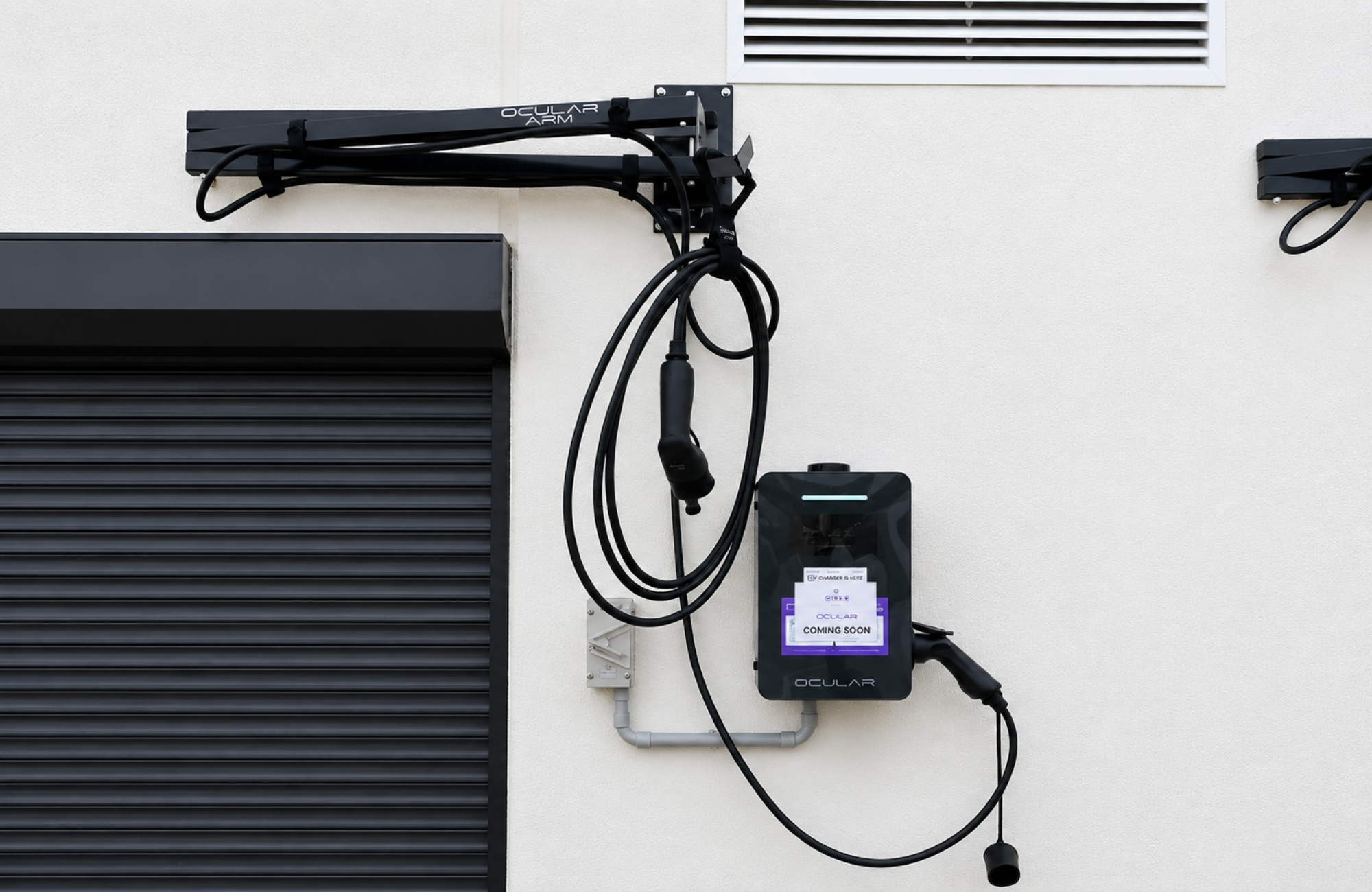
What EVSE Provides for Developers

  • NCC compliance assessment, a review of the applicable requirements for your project location, building class, and lodgement date
  • EV-ready electrical design, switchboard provisions, conduit sizing, cable capacity, and future-proofing specifications that meet NCC requirements and accommodate future installation without expensive retrofits
  • Installed charging systems, for projects requiring installed chargers, EVSE designs and delivers compliant hardware with load management for multi-residential and commercial applications
  • Strata and body corporate documentation, the compliance certificates, electrical plans, and operational documentation that strata managers and body corporates need for ongoing management
  • Builder and project manager engagement, EVSE’s commercial team works directly with your construction team to co

Multi-Residential: The Strata Complexity

Multi-residential developments present specific challenges that go beyond basic NCC compliance. Individual apartment owners want the ability to install their own charger without requiring body corporate approval for structural works. Body corporates want clear documentation of what the building can support, what’s been installed, and what future owners can do.

EVSE’s approach to multi-residential developments addresses both. EV-ready infrastructure is designed so individual owners can connect a charger to the pre-installed conduit and capacity provisions without requiring electrical infrastructure upgrades. The load management system, where installed at the common property level, ensures that individual charging doesn’t compromise building electrical supply.
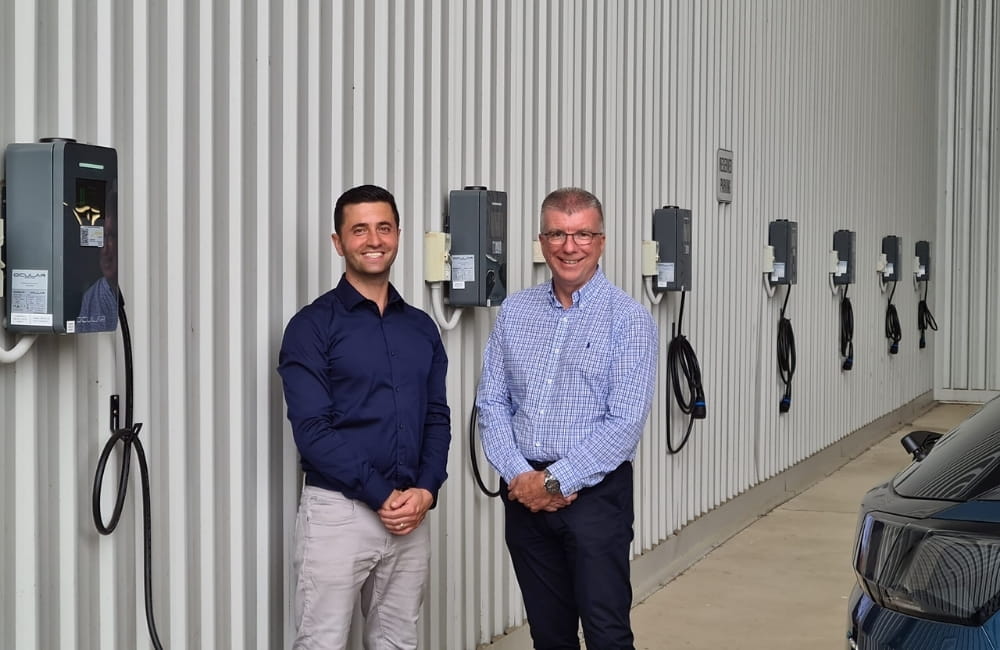
property developers - apartment ev charging

Frequently Asked Questions

In an apartment, a level 2 (mode 3) charge point is required to charge any electric vehicle as recommended by the AS3000 standards. Our EV chargers provide controlled, insulated, and protected power supplies. Our chargers meet all Australian and European standards and regulations, including those we are not required to meet for maximum safety and confidence in your electric vehicle system.
The equipment, depending on who has paid for the infrastructure will be owned entirely by the payee. EVSE can be engaged for any further works, as well as for post-installation maintenance.
Depending on the active managing of the charger’s load – if full supply is available meaning no power limitations, the chargers can charge: - 22kW - up to ~120-130km of range each hour - 7kW - up to 40km of range each hour This is dependent on the vehicle plugged in, some vehicles take 7kW single phase, 11kW three-phase and seldom 22kW three-phase.
Your EV charging infrastructure is built handover-ready. Once residents move in, the Owners Corporation selects how power is billed - either recovered automatically through our Exploren software, or wired directly to individual tenancy meters. This is configured after handover, so there's nothing for you to manage during construction.
An initial consultation and site inspection will need to be organised to determine costings around your chosen EV charger implementation. Each site varies vastly in terms of practicality of installation as well determining site specific conditions such as available supply and cable run distances.
The hardware and installation come default with 2 year warranty if EVSE is at fault with the charger and installation.
Our preferred smart charging system, Exploren, comes with our Smart Reporting platform which is both OCPP 1.6 and dual API enabled. The automated billing system itemises charge activity by charge point, cost and kWh consumed. Our multi-purpose platform is able to apply various pricing strategies – bill by the duration of charge or the electricity consumed. Furthermore the API allows integration into next generation building management systems and automated data exporting.
With any large development attention needs to be paid to electrical demand. The requirements for EV Charging can often outstrip demand. Using our OCPP-enabled systems helps you maximise the provision of charging points allowing you to balance loads automatically. Load Management is the most advanced safety feature offered by a variety of our products through the Exploren Network. This feature helps protect the properties’ electrical infrastructure while maintaining efficient operation of the Charging Infrastructure. Unlike other appliances, EV charging stations consume a large amount of power during operation. If there isn’t any form of load control, these stations may cause unexpected power outages or damage the electrical Infrastructure of the property. Through using OCPP, the charging systems have the functionality and capability to do 3 forms of load management, with ALM being the most advanced form of dynamically managing the EV charging system based on available power.
As Australia's largest supplier for developers, we have the expertise to minimise risks and ensure a successful rollout of EV charging across your development. Our process begins with our sales and engineering team consulting with the developer to review their plans and provide tailored recommendations for the required system. We then create detailed engineering and schematic designs based on the developer's specifications and collaborate with the building electrician to establish the necessary infrastructure. We offer an optional turn-key installation service, or we can provide support as needed. Following installation, we handle charge point commissioning and onboard users, ensuring a smooth transition. Our services also include software and firmware upgrades, live monitoring of the building's infrastructure, and ongoing maintenance, all with low fees.
Please click enquire now! A dedicated team member from the Apartments team will be in contact to assist
It depends on when construction commenced and your state's specific adoption provisions. In most jurisdictions, the NCC 2025 EV requirements apply to developments that commenced construction after the state's adoption date, regardless of DA lodgement date. EVSE can advise on the specific application to your project.
Installing conduit, switchboard provisions, and cable capacity at construction typically adds $800 to $3,000 per apartment equivalent to the construction cost. Retrofitting the same infrastructure after construction, requiring work in finished walls and ceilings, typically costs $4,000 to $12,000 per apartment. The cost of getting EV-ready right at construction is a fraction of the retrofit cost.
The EV infrastructure in a multi-residential or commercial development needs to be designed as part of the overall electrical design, not added as an afterthought by a separate trade. Poorly designed EV infrastructure that doesn't meet NCC requirements creates compliance exposure and retrofit cost. EVSE works with your project's electrical engineer to integrate EV provisions correctly from the design stage.

EVSE works with developers, builders, and project managers across Australia on NCC-compliant EV charging infrastructure. Contact us to discuss compliance requirements and design options for your development.

Contact Us

Nationwide EV Installation

What does this include?

  1. Customer is contacted within 24 hours of enquiry by EVSE to book site inspection

  2. Evaluate building supply & tailor cost effective solution by our expert team

  1. Install EV chargers in carpark with either a simple plug & play or managed solution

  2. Industry leading warranty with service agreements available to ensure safe long term use

Contact us for all Electric Vehicle Charging
Solutions and Accessories Across Australia
& New Zealand.

EVSE believes in a green sustainable future by delivering the latest EV Charging technology at the lowest price. All our work is certified and guaranteed with the backing of global brands.

Our team of experts can provide specialist EVSE advice and are available to answer any of your questions over the phone

"*" indicates required fields

Find the right charger

Tell us about your car and home to see recommendations.

Get the best price

Stocking the best Electric Car products from the World’s leading brands.

Reliability

All of our EVSE products are compliant with Australian & International standards.