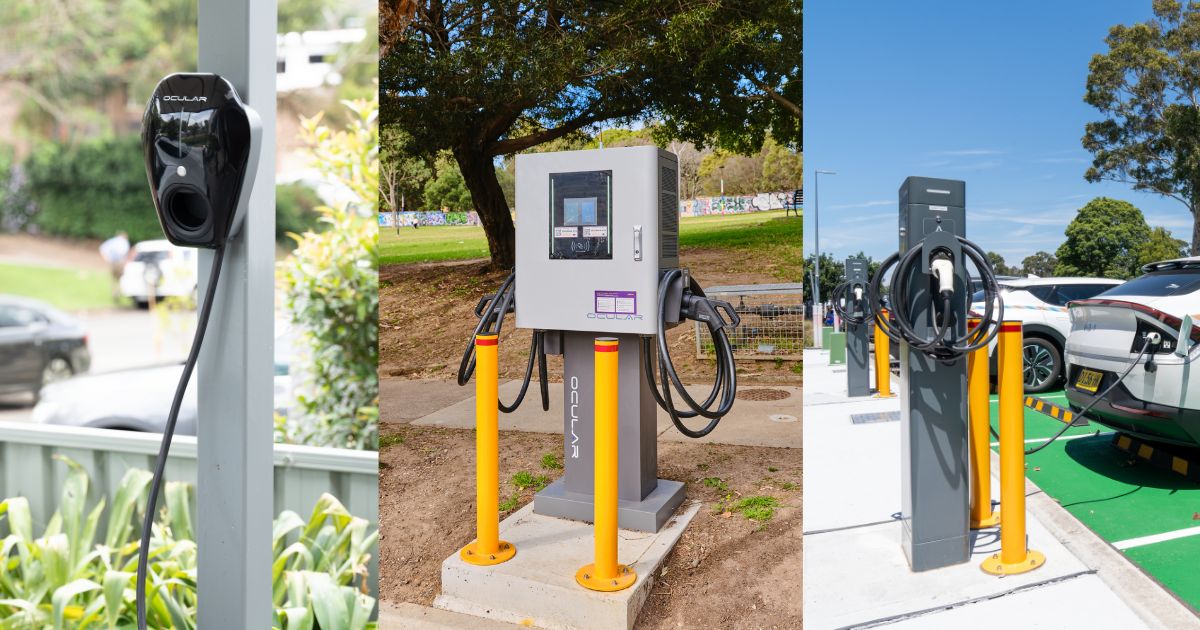
Home vs Public vs Workplace
Summary
The cost of EV charging in Australia in 2026 varies depending on where vehicles are charged. Home charging remains the most cost-effective option, while public and workplace charging offer convenience and operational flexibility at a higher cost.
As electric vehicles become more common across Australia, understanding the real cost of EV charging is an important part of ownership and business planning. While EVs are generally cheaper to operate than petrol vehicles, charging costs can vary significantly depending on charging location and usage patterns.
In 2026, electricity pricing structures, infrastructure maturity, and charging behaviour all influence overall charging costs.
Home EV Charging Costs
Home charging continues to be the most affordable option for most EV owners. Charging at home typically uses residential electricity tariffs, which vary by state and provider but remain lower than public charging prices.
Home charging costs are influenced by:
- Time-of-use electricity pricing
- Battery size and charging speed
- Use of rooftop solar and off-peak charging
Households that use solar generation can significantly reduce charging costs by aligning charging with peak solar output. Information on household energy pricing and usage can be found via the Australian Energy Regulator:
https://www.aer.gov.au
Public EV Charging Costs
Public charging is essential for long-distance travel and drivers without private charging access. In 2026, public charging remains more expensive due to infrastructure investment, maintenance, and network operation costs.
Pricing varies depending on:
- AC versus DC fast charging
- Location and charging network
- Per-kWh or time-based billing
Workplace EV Charging Costs
Workplace charging sits between home and public charging in terms of cost. Many employers offer subsidised charging or recover electricity costs through access control and billing systems.
Costs depend on:
- Charger type and installation requirements
- Load management strategies
- Whether charging is free, subsidised, or user-paid
Guidance on workplace charging and energy efficiency is available through the Department of Climate Change, Energy, the Environment and Water:
https://www.dcceew.gov.au
Final Thoughts
In 2026, the most cost-effective EV charging strategy combines home charging as the primary solution with public and workplace charging for flexibility. Understanding electricity pricing and charging behaviour helps manage costs while maintaining convenience.