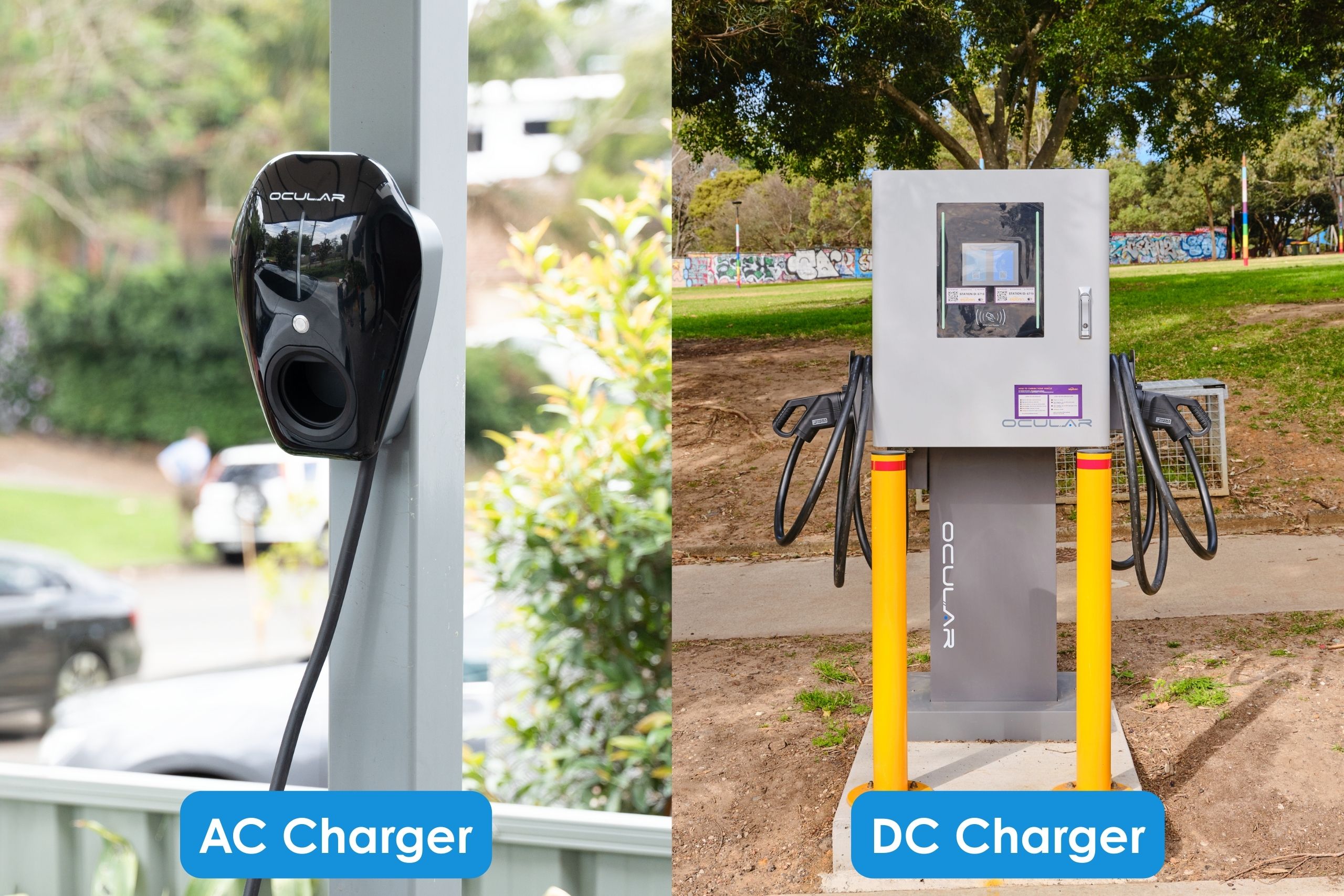
AC vs DC Chargers

Featured Image

AC chargers supply alternating current and are used for home charging at speeds from 7kW to 22 kW. DC chargers supply direct current and are used for fast commercial charging from 25 to 420 kW. Homes use AC chargers while many businesses and public sites use DC chargers.

  • AC chargers are for homes.
  • DC chargers are for commercial fast charging.
  • AC power is converted to DC inside the vehicle which then charge the vehicle’s battery.
  • DC chargers bypass the onboard charger by converting electricity before reaching the vehicle.

AC chargers explained

AC chargers are the standard home charging method. They rely on the vehicle’s onboard charger to convert AC to DC. This limits the speed to between 7kW and 22kW depending on the vehicle and supply type.

DC chargers explained

DC fast chargers convert AC to DC externally and feed power directly to the battery. This enables very high charging speeds but requires large electrical infrastructure which is not suitable for homes.

Recommended models

AC: Ocular IQ Home Solar Universal and Ocular LTE Plus.

DC: Ocular Titan or Ocular Atlas

Comparison Table

Power Output Applications </th
AC 7 to 22 kW Suitable for homes & light fleets.
DC 25 to 420 kW Suitable for commercial applications & public charging.

Frequently Asked Questions

Can I install DC at home?

No, power requirements are too high

Is AC safe outdoors?

Yes with weather rated units such as Ocular chargers.

Do all EVs support DC?

Yes all current EVs do, but speeds vary depending on the vehicle.

Does DC charging harm batteries?

DC charging has a very small effect on battery health compared to AC charging, especially for average EV drivers. There is a greater effect on wear and tear for vehicles operating high-use duty cycles similar to high-use petrol vehicles.

Not sure which AC charger is right for your home? Get a tailored installation quote today. Or choosing between AC and DC charging for your business? Request a tailored commercial quote today. 

Author

Share this Article

Will Solid-State Batteries Revolutionise Electric Cars & How it Improves Public EV Charging?

Solid-state batteries have long been touted as the next big leap in electric vehicle (EV) technology, promising smaller, lighter, and safer batteries with faster charging capabilities. Now in 2025 we are seeing the first commercial vehicles become available. So, what makes solid-state batteries so promising, and how close are we to seeing them in cars? […]
Read More

Smart Home EV Charging: How AI and Automation Will Shape Charging in 2026

As electric vehicle adoption accelerates across Australia, homeowners are looking for faster, safer and smarter ways to charge their EVs. With artificial intelligence, smart meters and automated load-balancing becoming mainstream, smart home EV charging in 2026 will look very different from how Australians charge today. This guide explains how AI will shape the future of […]
Read More

Find the right charger

Tell us about your car and home to see recommendations.

Get the best price

Stocking the best Electric Car products from the World’s leading brands.

Reliability

All of our EVSE products are compliant with Australian & International standards.